


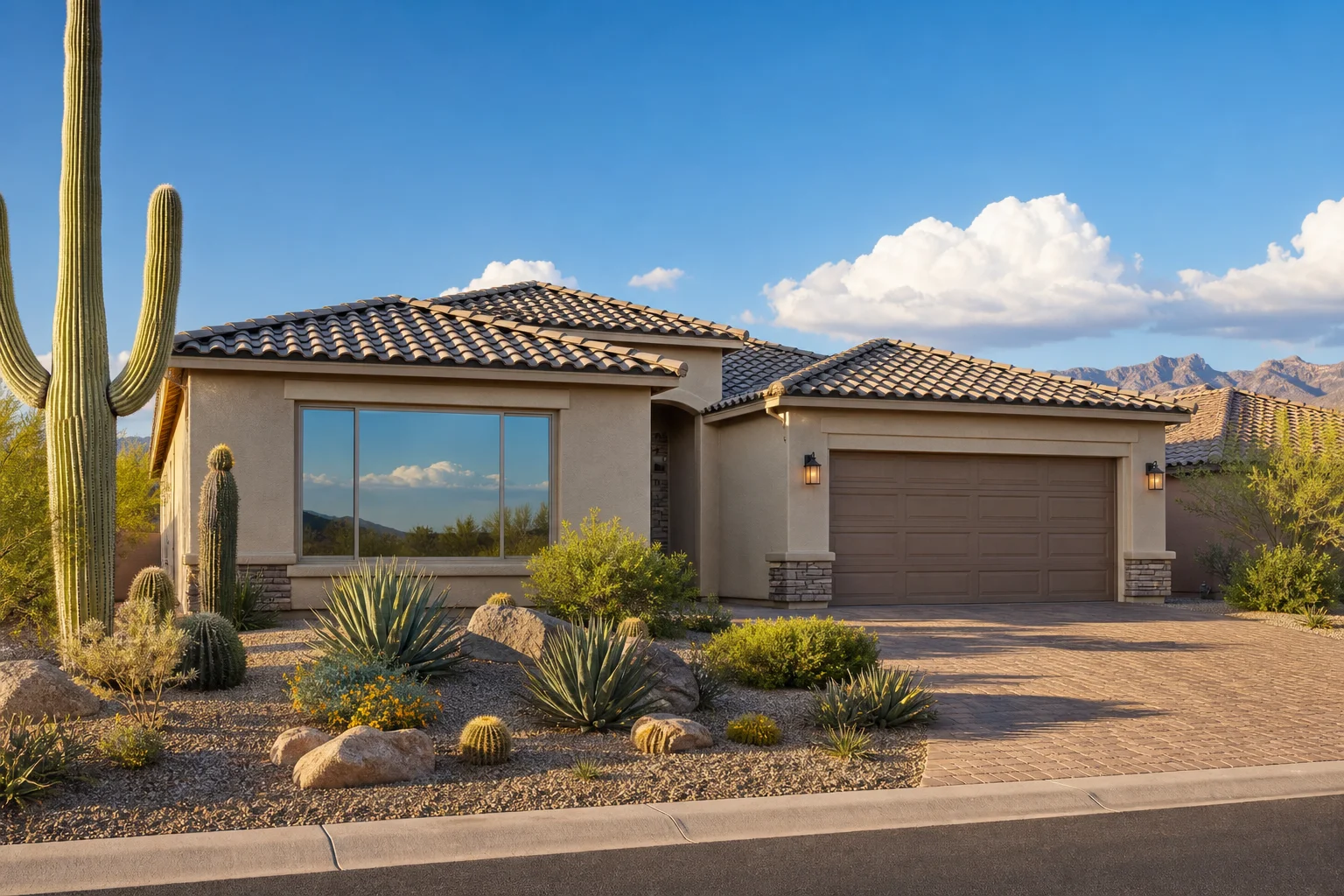
Comparing impact and dual-pane windows for a Phoenix-area home comes down to one question: what does your house actually need to withstand, monsoon winds, summer heat, or street noise? For most Arizona homeowners, a full Windows & Doors upgrade built around dual-pane glass, with impact-resistant options where it counts, outperforms patch repairs on an old frame.
By Tycho Solutions Team
What Makes Impact and Dual-Pane Windows Different
Impact and dual-pane windows solve two different problems, and confusing them is the most common mistake homeowners make while shopping. Dual-pane windows, also written double-pane or double pane windows, use two panes of glass separated by a sealed air space instead of one single pane. That extra layer of glass slows down heat transfer and helps with noise reduction, which is why double-pane windows have become the standard replacement choice across the Valley.
Impact windows are a separate category built around the glass itself, laminated or reinforced panes designed to stay intact when struck by debris rather than shatter into sharp pieces. Many Arizona homeowners search for hurricane windows after reading roofing or window guides written for Florida or the Gulf Coast, then wonder if the same product applies here. It is a fair question. Arizona's risks are different from a hurricane coastline, but real enough that impact-rated glass still earns a place in a serious upgrade for many homes. Framed the right way, impact-rated glass is less about withstanding a storm that will not arrive and more about daily durability, monsoon debris, stray landscaping rocks, the occasional errant baseball, without sacrificing the clarity of the view, including for homes covered by Chandler windows and doors.
Arizona's Real Window Stressors: Monsoon Winds, Heat, and Dust
Wind and Flying Debris
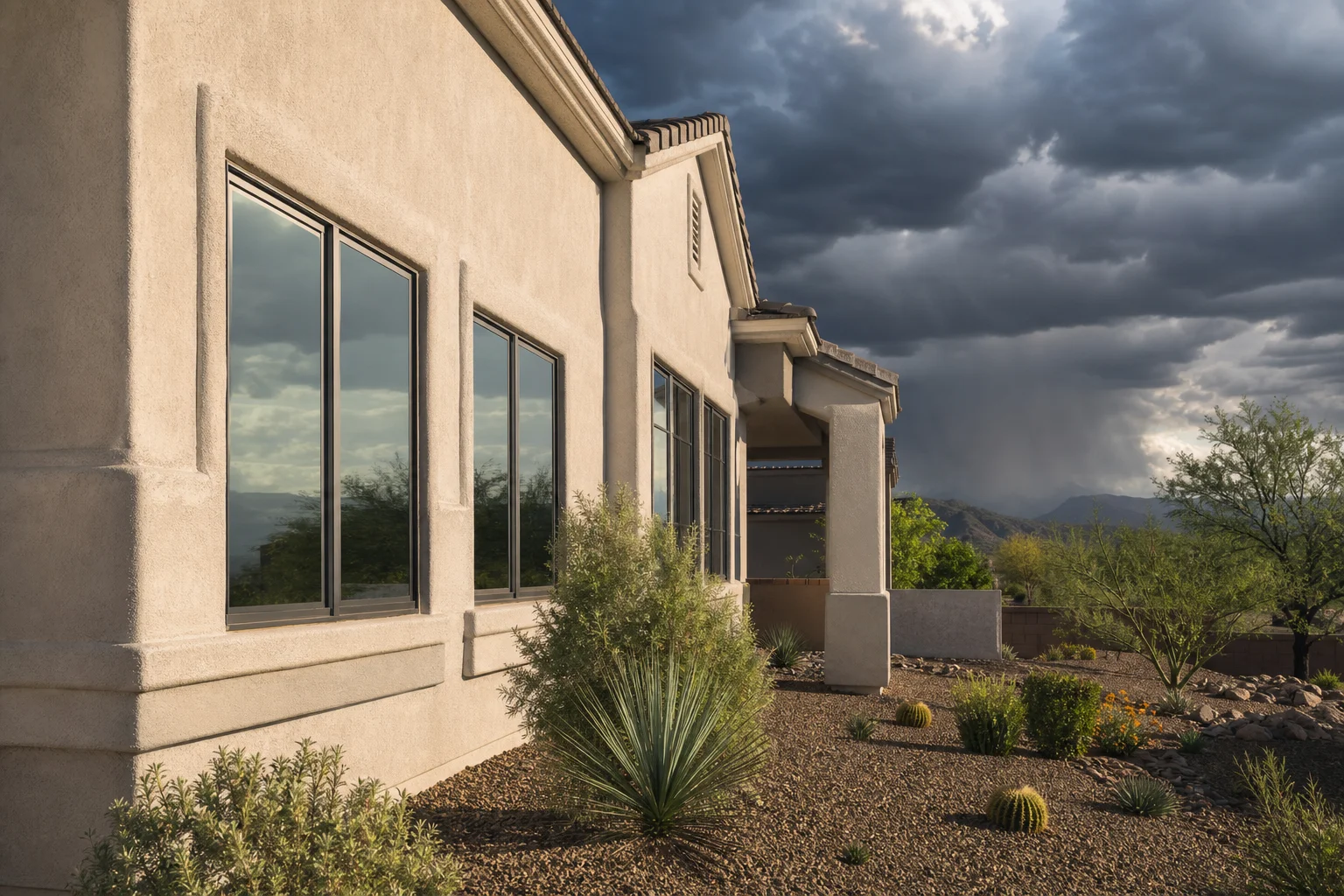
Set hurricane-force winds aside for a moment, Phoenix has never taken a direct hit from a tropical storm, and it never will. What the Valley gets every summer instead is monsoon season: fast-moving thunderstorms that produce wind gusts strong enough to snap tree limbs, flip patio furniture, and turn loose gravel and palm fronds into flying debris within minutes. Monsoon microbursts can produce gusts that rival hurricane-force winds for the short window a storm cell sits over a neighborhood, even though the broader weather pattern has nothing to do with an actual hurricane.
That combination, sudden high winds plus airborne debris, is exactly what impact-resistant glass is built to handle.
Heat, UV, and Dust
Add in the rest of Arizona's extreme weather conditions, months of triple-digit heat, intense UV exposure, and blowing dust between storms, and it becomes clear why a single pane of ordinary glass struggles to offer real protection year-round. Dual-pane windows address the heat and UV side of that equation, while impact-rated glass addresses the wind and debris side, which is why many Tycho customers choose both instead of picking one over the other. None of this is unique to any one neighborhood; homes in Mesa, Gilbert, Chandler, Queen Creek, and San Tan Valley all face the same sun angle and the same monsoon track, just with slightly different lot orientations and shade coverage.
Energy Bills, Noise, and Everyday Comfort
Beyond storms, the daily case for double pane windows comes down to comfort and cost. Single-pane glass is one of the weakest points in an Arizona home's building envelope, and it shows up directly on energy bills every summer when the air conditioner runs longer to fight heat coming straight through the glass. Replacing old single-pane windows with double-pane windows, ideally with a Low-E coating suited to desert sun, is one of the more noticeable upgrades a homeowner can make. A Low-E coating is a microscopically thin layer on the glass that reflects radiant heat back outside while still letting daylight through, so it works with the sealed air space of dual-pane glass rather than against it, cutting solar heat gain in summer without darkening the room or blocking the view. That pairing is what turns a standard double-pane upgrade into one built specifically for desert sun rather than a generic climate. Low-e window coatings are worth a closer look for homeowners deciding which coating level fits their exposure.
Noise reduction is the upgrade people notice fastest, often before the first utility bill even arrives. The sealed air space in double-pane windows blocks a meaningful amount of everyday street noise, traffic, barking dogs, landscaping crews, compared to a single pane of glass. For homes near busier roads in Mesa, Gilbert, or Chandler, that noise reduction alone is often reason enough to prioritize replacement sooner rather than later. Dual-pane glass slows down how much heat and sound pass through the window opening itself, but it cannot fix poor attic insulation, leaky duct work, or gaps elsewhere in the building envelope, so it lowers a summer AC bill without being the entire answer to one. Even with that limit, because windows are typically the weakest point in the envelope, replacing them tends to move the needle more than almost any other single upgrade. Energy-efficient windows are worth weighing alongside insulation and duct sealing rather than in place of either.
Repair vs. Replace: Why Full Window Replacement Wins
Tycho Solutions does not perform minor patch repairs, and windows are a good example of why that is the right call rather than a limitation. A fogged seal, a cracked pane, or a window that will not latch is rarely an isolated problem. It is usually a sign that the whole unit, frame, seal, and glass together, is near the end of its useful life. Homeowners sometimes ask for a quick reseal or a single pane swap to save money up front, but that approach rarely holds up past the next monsoon season or the next heat wave. Patching one symptom on an old single-pane frame does not add impact resistance, does not improve insulation, and does not stop the next seal from failing a season later.
A full replacement with new double pane windows lets a home take advantage of everything modern glass and framing provide at once: better insulation, better noise reduction, and, where it matters, impact-rated protection against monsoon debris. These windows provide a meaningful safety upgrade too, laminated glass is harder to break through than standard single-pane glass, which matters for ground-floor windows and homes near open desert lots. Choosing full replacement over a patch repair is the easier choice once you weigh long-term cost against a short-term fix. Most summer heat gain at a window comes in through three paths: radiant heat passing directly through the glass, heat conducting through the glass and frame themselves, and warm air leaking in around an old, worn frame. Dual-pane glass and a Low-E coating cut down the first two, while a full replacement with a properly sealed new frame closes off the third, something a patch or a re-caulked seal rarely manages for long. The exact mix shifts by window orientation and shading, which is where heat gain through windows becomes useful for sizing up one specific room.
Frequently Asked Questions
Do Arizona homes actually need impact and dual-pane windows if we do not get hurricanes?
Arizona does not see hurricanes, but monsoon season still brings high wind gusts, dust storms, and airborne debris that can crack ordinary glass. Impact-resistant windows use reinforced or laminated glass built to hold together under that kind of stress, which also adds a layer of security against break-ins. For most Valley homes, the bigger year-round win is pairing that strength with dual-pane insulation for heat and noise control.
What is the real difference between dual-pane and single-pane windows?
Dual-pane windows use two panes of glass with a sealed insulating space between them, instead of a single pane. That extra layer slows heat transfer, so summer sun and winter cold have a harder time reaching your living space, and it helps dampen outside noise. Older Arizona homes with single-pane glass typically lose more conditioned air and let in more street and traffic noise.
Will new windows actually lower my energy bills?
Windows are one of the biggest sources of unwanted heat gain in an Arizona home, so upgrading from single-pane to double-pane glass with a suitable Low-E coating typically reduces how hard your air conditioner has to work. Exact savings depend on your home's size, orientation, and current windows, which is why an on-site assessment gives a more accurate picture than a general estimate.
Should I repair my old windows or replace them?
Tycho Solutions focuses on full window replacement rather than minor patch repairs, because a single failed seal or cracked pane is usually a sign that the whole unit is near the end of its service life. Replacing the full window with dual-pane, impact-resistant glass addresses insulation, noise, and durability at once instead of temporarily patching one symptom.
What kind of warranty comes with new windows from Tycho Solutions?
New window installations are backed by a manufacturer-backed warranty, with exact terms varying by product line. Your Tycho estimator can confirm the specific coverage that applies to your home during your free, on-site assessment, so you know exactly what is protected before any work begins.
Find Out What Your Windows Actually Need
Every home's monsoon exposure, sun orientation, and noise levels are a little different, so the right mix of impact and dual-pane windows is not the same for every address in the Valley. See what your home actually needs, Get a Free Estimate and Tycho Solutions will walk the property before recommending anything specific.