


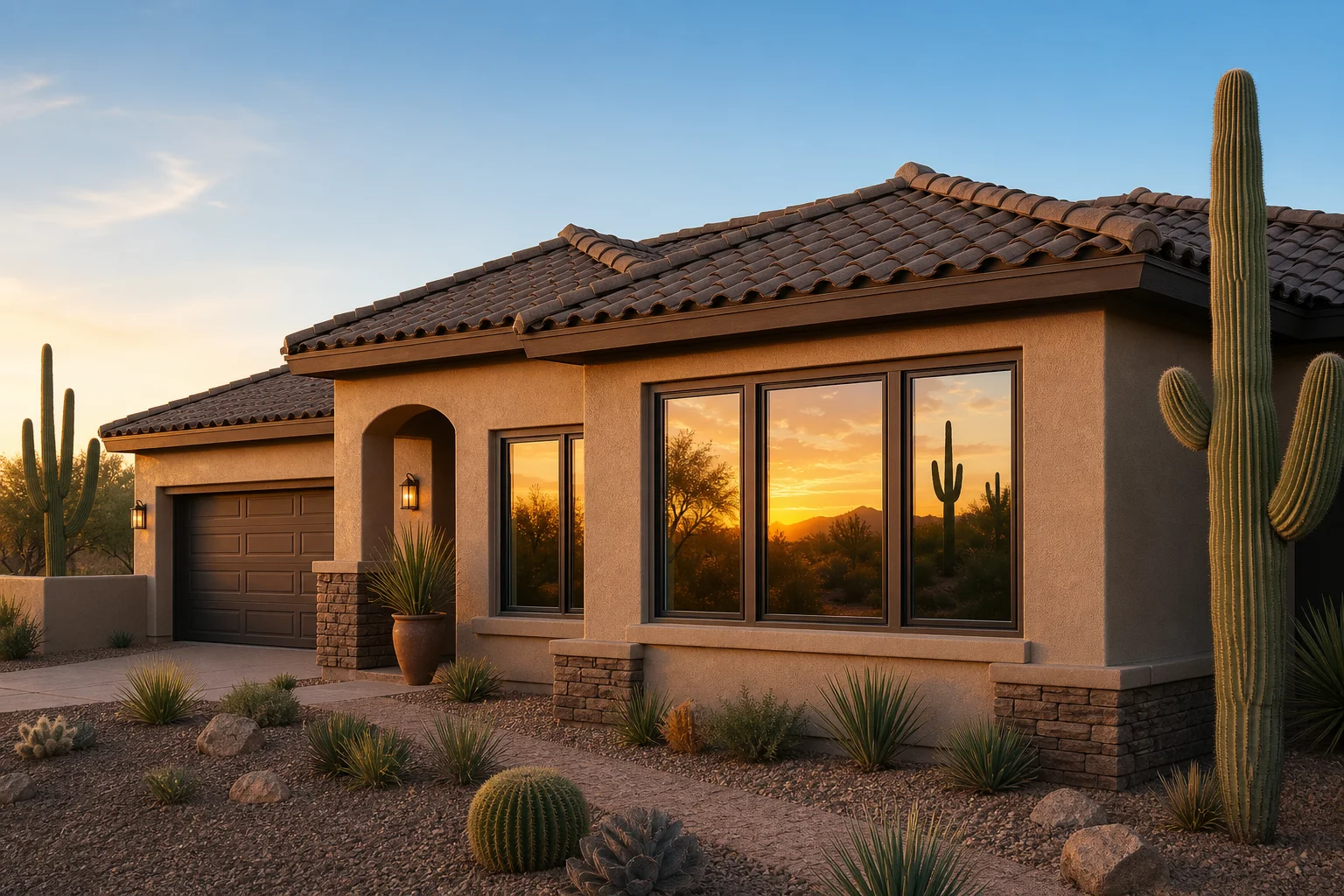
Are new windows worth it in Arizona? For most homes older than 15 years, yes. Replacement windows cut heat gain, lower cooling costs, and boost curb appeal enough to justify the investment, especially paired with a full Windows & Doors upgrade built for desert exposure.
By Tycho Solutions Team
Arizona homes fight a different battle than houses almost anywhere else in the country. Unlike a home in Washington, where the priority is holding heat inside through a wet winter, a Phoenix or Mesa house spends most of the year trying to keep heat out. Old single pane or aging dual pane glass lets that desert sun load straight into the living room, forcing the HVAC system to work overtime from April through October.
That is the core reason new windows earn their keep here faster than in milder states. Reduced heat gain means less strain on the compressor, lower monthly bills, and a home that actually feels comfortable in August instead of just tolerable. That is the kind of energy efficiency upgrade that pays for itself in comfort long before it pays for itself in dollars. On the resale side, appraisers and buyers in this state have learned to price in window condition. Foggy dual pane seals or sun warped frames are an easy flag during a home inspection, and a documented upgrade tends to read well on a listing.
So are new windows worth it in Arizona when you are not planning to sell for years? Comfort and energy savings alone answer that for most homeowners, long before resale enters the conversation.
What Replacement Windows Change Inside Your Home
The most noticeable difference after a full window replacement is not visual, it is thermal. Modern Low-E glass packages are engineered to block the infrared portion of sunlight that carries heat while still letting visible light through. That is a meaningfully different experience than standing near a bare pane of old glass on a June afternoon, when you can feel radiant heat coming off it several feet away.
Framing matters just as much as the glass. Vinyl frames resist the expansion and warping that Arizona's temperature swings cause in wood or poorly sealed aluminum, which is part of why vinyl has become the standard choice for replacement windows across the Phoenix metro. Tight, correctly installed frames also cut down on dust infiltration, a persistent complaint in desert homes with older, loose fitting windows. Pairing new windows with attic and wall Insulation closes the rest of the thermal envelope, so the cooling savings compound instead of leaking out somewhere else.
Low-E coatings are not one-size-fits-all. A coating tuned for a heat-gain climate blocks solar heat before it crosses the glass, while a coating tuned for a cold climate is built to hold indoor heat in instead, and the two can look identical on a shelf despite performing very differently once installed in a Phoenix or Mesa home. Matching low-e coating performance to the climate, rather than shopping by price alone, is the detail that actually determines how much heat gain the glass blocks.
Window Replacement Cost in Arizona: What Drives the Price
New windows cost more upfront than a single repair, but the comparison is not really apples to apples given what a repair cannot fix permanently. Every home is different, so treat any general number as a starting point, not a quote. What actually moves the price on a whole home window replacement includes the number of openings, frame material, glass package, and whether existing openings need structural correction.
Arizona adds one more variable most other states do not weigh as heavily: glass performance. A Low-E package built for high heat gain climates costs more upfront than builder grade glass, but it is doing more work every single day it is installed, which is where the real savings show up on the utility bill rather than the purchase price. Whether that upfront gap pencils out for your budget depends mostly on what you are replacing: a home still running single pane glass sees the fastest payback, because every month it is leaking heat at the highest possible rate, while a home already on aging dual pane sees a slower return since some of that improvement is already captured. Either way, the savings compound with each passing summer instead of showing up as one lump credit, which is why running the energy-efficient window savings math against your own utility bill matters more than any generic estimate.
Windows are not the only whole home upgrade Arizona buyers notice. Roofing carries its own return on investment story worth understanding side by side, and it follows a similar shape to windows: buyers and appraisers treat a documented full roof replacement as a mark of a well maintained home, and tile roof replacement cost swings on comparable factors, like roof size, material choice, and whether structural correction is needed underneath the tile, rather than on square footage alone.
Signs It's Time to Replace Windows Instead of Repair
Not every window problem calls for a full replacement, but Tycho focuses on new construction and whole system replacement rather than one off patch repairs, because certain issues simply cannot be solved with a caulk gun and a Saturday afternoon. Fogged glass between panes means the seal has failed permanently, no amount of cleaning fixes a broken seal. Frames that have warped, cracked, or separated from the stucco are a structural issue, not a cosmetic one.
If you are only dealing with a single sticky window or a torn screen, that is a minor fix. But if you are noticing the same problems across multiple windows, drafts, condensation, visible frame damage, higher bills, that is usually a sign the whole set has reached the end of its service life together, since most homes get their windows installed in one batch and they tend to fail on a similar timeline.
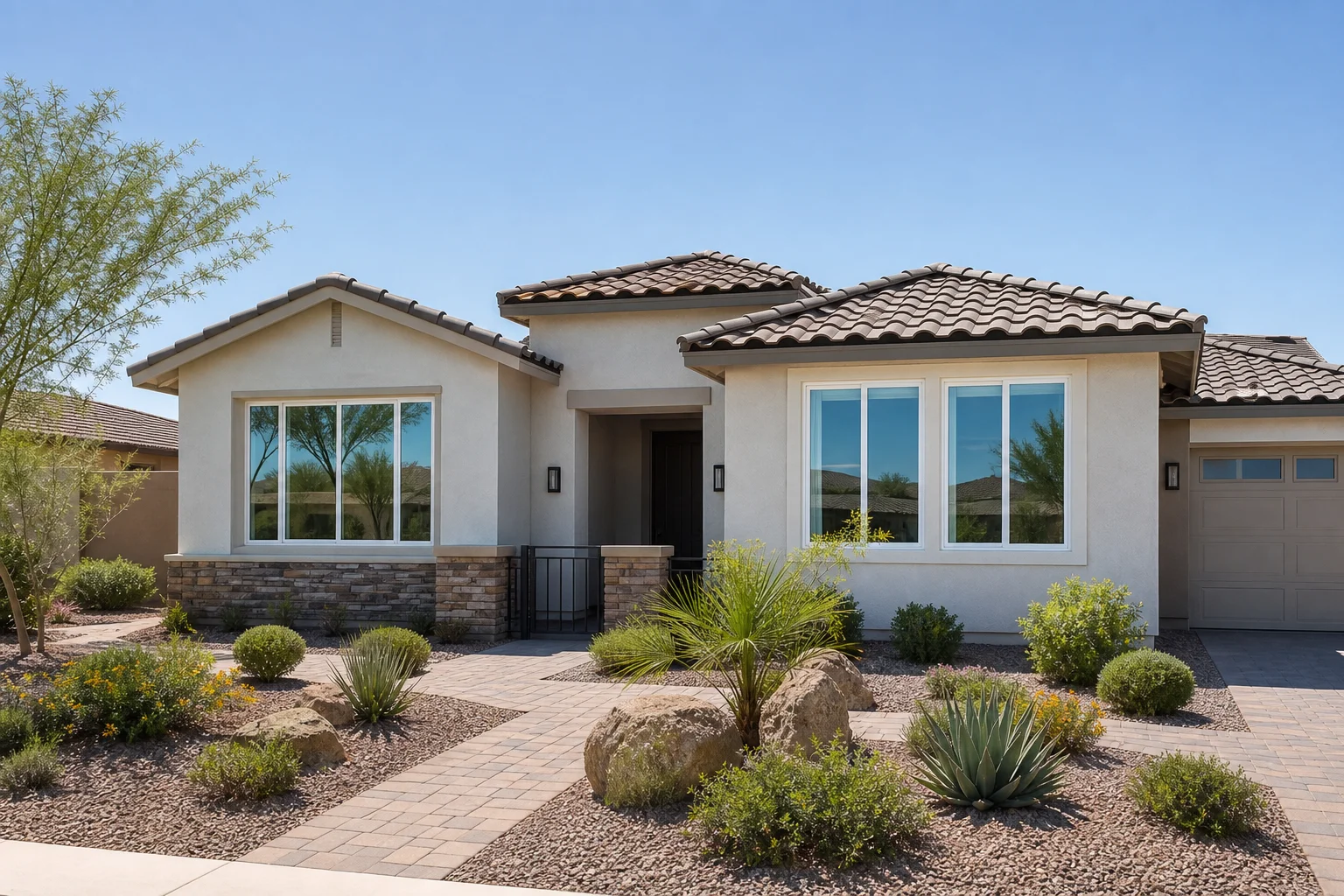
The combination that tends to hold up best here pairs a frame material that will not expand or warp under Arizona's repeated summer heat with a Low-E glass package tuned for heat gain rather than cold retention, since either piece alone leaves the other doing more work than it should. windows for desert heat compares how different frame and glass pairings perform under that kind of repeated thermal cycling.
Choosing the Best Window Materials for Desert Homes
Vinyl remains the most common frame material for replacement windows in this climate, largely because it does not rust, rot, or require repainting the way wood and some metal frames do. It also expands and contracts predictably with heat, which keeps seals tighter over time than materials that warp unevenly. When you replace windows in an older Arizona home, expect some incidental stucco patching around each opening.
Glass options matter more than frame color or style. Look for a Low-E package built specifically for high heat gain climates rather than a generic cold climate spec, since the coating that keeps a colder state's home warm is not necessarily the coating that keeps a Phoenix home cool. If you want windows Arizona summers will not defeat, that distinction is worth asking your installer about directly.
Materials aside, installation quality decides whether any of this performs as expected. Even premium glass underperforms if installers do not properly flash and seal the opening, which is why the labor behind a window replacement matters as much as the product itself. Every full window replacement Tycho installs is backed by manufacturer-backed warranty coverage on top of quality installation, not a patch repair promise.
Frequently Asked Questions
Are new windows worth it in Arizona if I'm not planning to sell soon?
Yes. Most of the return shows up in comfort and lower cooling costs, not resale. Reduced heat gain means your HVAC system cycles less often during peak summer months, which shows up as a noticeable drop in your energy bill well before you would ever list the home for sale.
How much does window replacement cost in Arizona?
Cost depends on the number of openings, frame material, and glass package, so a number quoted without seeing your home is a rough guess. For an accurate window replacement Arizona quote, exact pricing requires an assessment of your specific windows and home layout.
What's the best window material for Arizona's heat?
Vinyl is the most common choice for replacement windows here because it holds up to temperature swings without warping, rotting, or needing repainting. Pairing a vinyl frame with a Low-E glass package built for high heat gain climates is generally the strongest combination for desert exposure.
Can I just repair my windows instead of replacing them?
Sometimes a single failed screen or sticky sash is a minor fix. But fogged glass, failed seals, and warped or cracked frames are permanent problems that patch repairs cannot solve. When the same issues show up across multiple windows, a full replacement is usually the more practical long term move.
Get Your Free Window Replacement Estimate
If your windows are original to the home, showing condensation between panes, or working against your energy bill instead of for it, it is worth finding out what a full replacement would actually look like for your house. Get a Free Estimate and Tycho Solutions will walk your home and give you real numbers instead of guesses.