


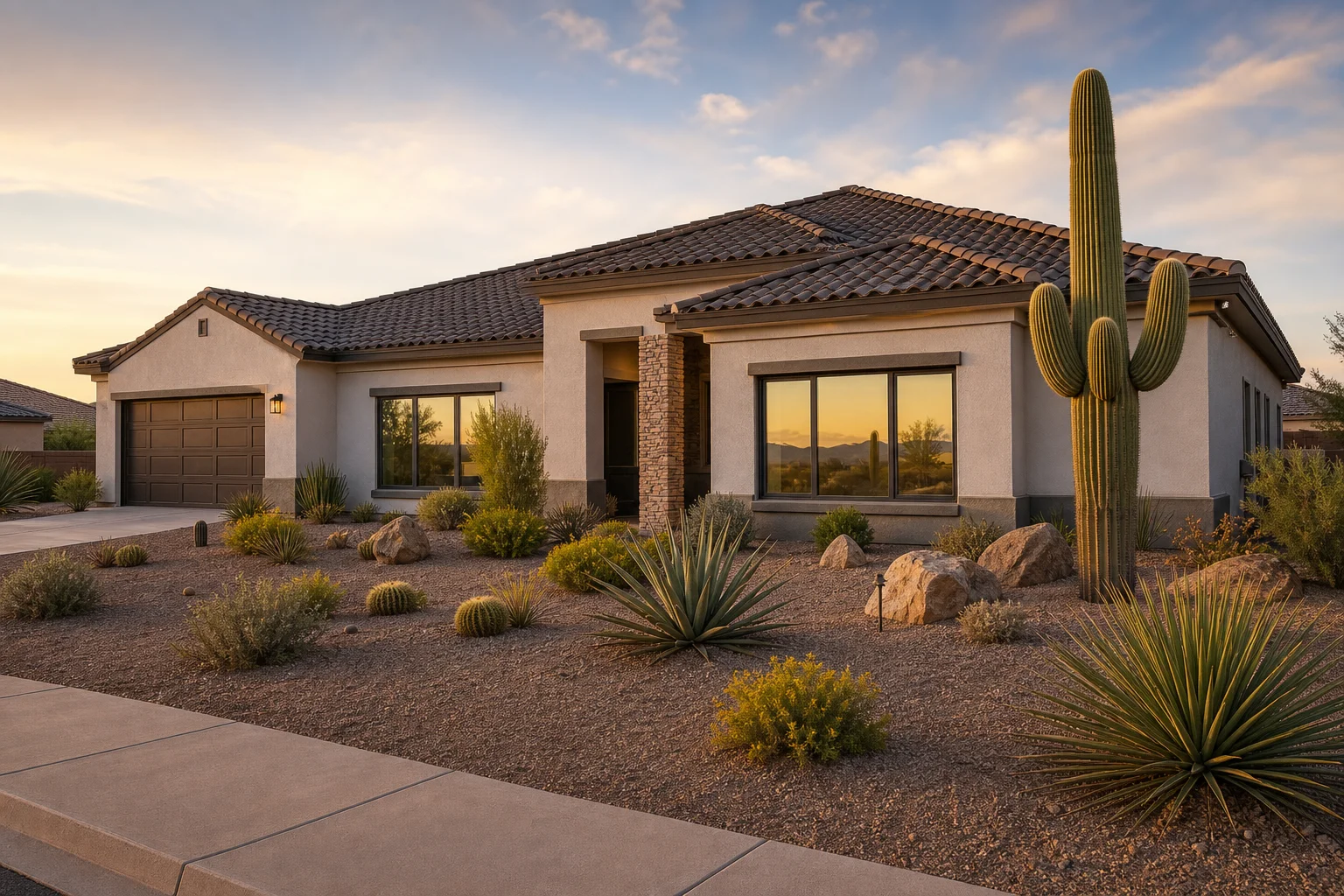
If your Arizona home still has its original single-pane windows, a whole-home window replacement in Arizona can cut energy loss, quiet outside noise, and boost curb appeal in one project. Our Windows & Doors team explains what a full-house upgrade costs and delivers before you commit.
By Tycho Solutions Team
Signs Your Arizona Home Needs New Windows
Desert heat is hard on glass, vinyl, and aluminum alike. A few physical signs separate a window that's simply old from one that's actively working against your energy bill: condensation trapped between panes, frames that have gone brittle and cracked in the sun, moving parts like sashes and locks that stick or won't latch, and cooling bills that keep climbing even after a tune-up. Walk the house with this quick list in hand, room by room, and note which openings show more than one of these things.
If even a handful of windows fail that walkthrough, it's usually a sign the whole set, not just a single unit, has reached the end of its service life. Modern replacement windows use glass packages built for high-UV, high-heat climates, and they shield interior floors, furniture, and finishes from the kind of fading and heat gain that older single-pane glass never stopped.
What's Included in a Whole-Home Window Replacement
"Replacement" is the operative noun here, not "repair." A company that specializes in new construction and full-system upgrades, rather than spot patching, pulls permits, removes every existing sash down to the framing, and installs new windows unit by unit until the entire home is done in one pass. The object of treating the house as one whole-home project, rather than a series of one-off fixes, is consistency: every window performs the same way and ages the same way. In other words, a whole-home approach treats the house as one connected system instead of a pile of individual fixes tackled a few years apart.
A complete whole-home job typically includes:
- Removal and disposal of every old window unit
- Framing repair where wood or stucco has deteriorated
- Window installation with manufacturer-specified flashing and sealant details
- Interior and exterior trim to match the home's existing lines
- A final inspection of every opening before the crew leaves
Many whole-home projects bundle door replacement into the same visit, since patio sliders and entry doors sit in the same openings and share the same weatherproofing details as the windows around them. Bundling a sliding door into a whole-home job typically costs less than scheduling it as its own project later, since it shares the crew, permit, and mobilization already covering the windows nearby, savings that factor directly into sliding door replacement cost. Swing-style patio doors use a separate frame and hinge hardware rather than a sliding track, a distinction that changes patio door replacement cost as well.
Each piece of trim and each pane is measured to its own opening rather than ordered to a generic stock size, which is part of why a whole-home quote takes longer to put together than a single-window estimate.
Cost Factors for Whole-Home Window Replacement in Arizona
Every whole-home window replacement in Arizona is priced around the same handful of variables: how many openings the home has, the frame material and glass package chosen, and how much labor the removal requires, and exact pricing requires an on-site assessment. The full window replacement cost breakdown covers additional line items like permitting and disposal fees; the short version specific to whole-home projects is below.
Window Count and Home Size
The single biggest driver is simply how many openings the home has. A single-story house with a dozen windows costs less to convert than a two-story home with twenty, since labor, not glass, makes up a large share of the total.
Frame Material and Glass Package
Vinyl, aluminum, and composite frames carry different price points, and glass packages built for desert exposure add cost over builder-grade glass. This is where "best window" gets subjective: the best window package for a west-facing Arizona home built for heat rejection is not always the product a builder installed by default.
Labor and Removal of Old Windows
It's the labor of removing every old frame down to the studs, not just swapping glass, that drives most of the cost difference between a whole-home project and a handful of single-window jobs done over several years. Because each opening is measured and pre-ordered to fit, existing framing rarely needs to be completely rebuilt on-site, which keeps labor time predictable across the project. Reduced trip charges and a single mobilization also make the whole-home route more efficient per window than piecemeal replacement.
You can request a walkthrough online before committing to a full quote, and every estimate is free.
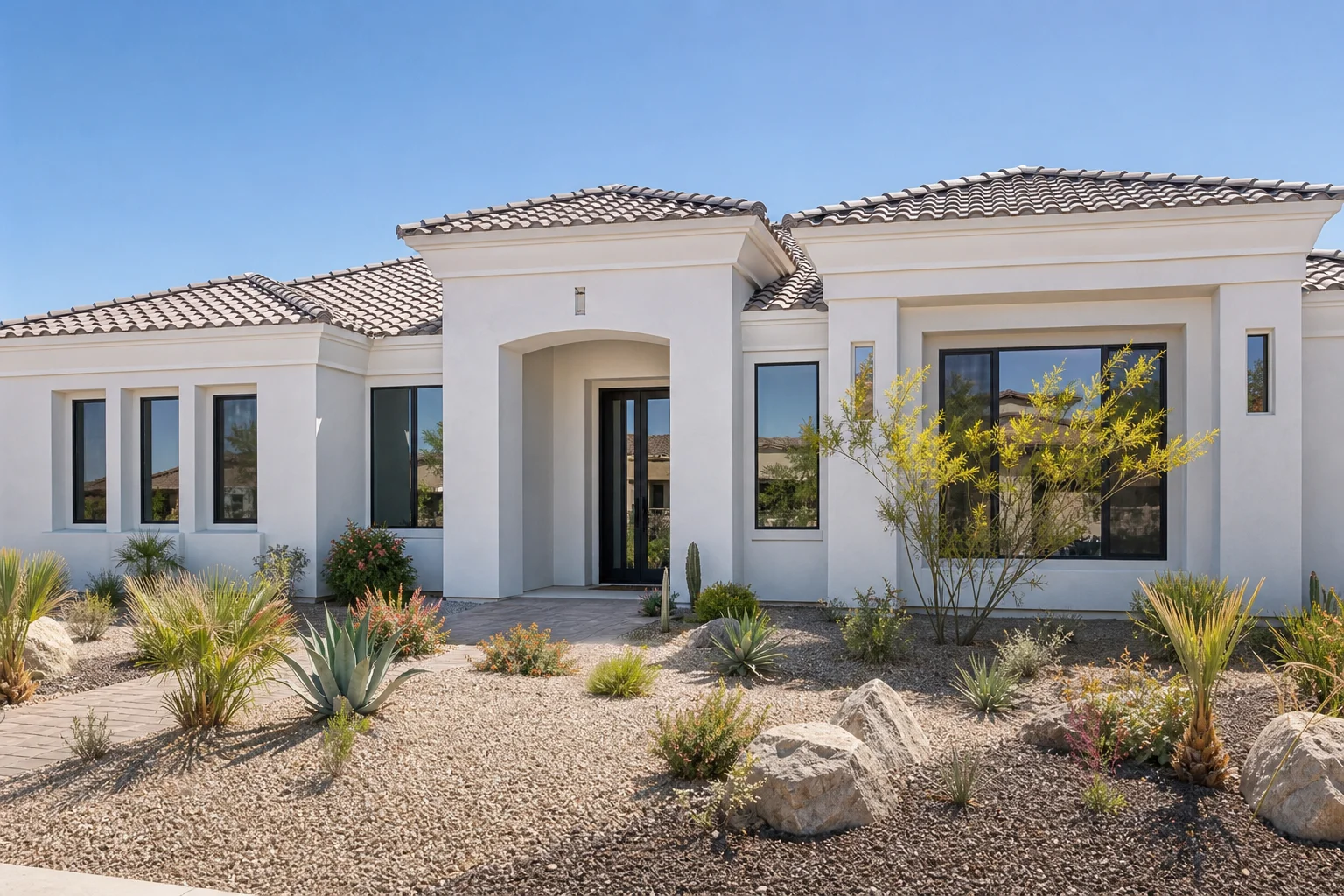
Benefits of Replacing Every Window at Once
In plain English: one crew, one schedule, and one warranty period for every window in the house, backed by a manufacturer warranty rather than a patchwork of different install dates and different products. As the old idiom goes, a chain is only as strong as its weakest link, and a home's window performance is only as good as its worst-performing pane. Leave two or three old windows in place and the whole envelope still leaks air and heat through them.
A single mismatched window left over from a partial upgrade often becomes an artifact of the home's age, a detail appraisers and buyers notice even when the rest of the house has been updated. Homeowners sometimes treat "replacement" and "renovation" as synonyms, but a whole-home window project behaves more like a systems upgrade than a cosmetic one, because it changes how the entire building envelope performs.
Because the envelope changes all at once, your HVAC Systems can run less to hold the same indoor temperature, since it's no longer fighting heat gain through a dozen mismatched panes. Replacing old single-pane windows with efficient units can also qualify a project for federal or state energy-efficiency incentives, though eligibility depends on the specific products installed and changes from year to year. The current window replacement tax credit rules are worth checking before scheduling, since qualifying products and claim limits shift with each tax year.
Whole-Home Replacement vs Replacing Windows One at a Time
By dictionary definition, "whole-home" simply means every opening in the structure gets addressed, not just the ones facing the street. Replacing windows one at a time as budget allows feels lower-risk in the moment, but it usually costs more per window over time, stretches the disruption across several separate projects, and leaves the home with mismatched performance for years.
For most Arizona homes carrying original or badly aged glass, the best window replacement plan is the whole-home approach: one mobilization, one crew, one set of new windows installed to a consistent standard from the first opening to the last. Homeowners weighing the same decision face an identical tradeoff either way: address every window now, or spread mismatched replacements across several years and several separate invoices.
Frequently Asked Questions
How long does a whole-home window replacement take in Arizona?
Timelines depend on the number of openings, frame material, and whether any framing repair is needed, so an exact schedule comes from the on-site assessment. Most whole-home projects are completed in a matter of days rather than weeks once the custom-sized windows arrive and are staged for installation.
Is whole-home window replacement more affordable than replacing windows individually?
Per-window cost is usually lower with a whole-home project because labor mobilization, permitting, and disposal are shared across every opening instead of repeated for each individual job. Exact savings depend on window count and condition, which is why pricing requires an assessment rather than a flat number.
Do I need to replace doors at the same time as my windows?
No. Door replacement can be scheduled separately, though many homeowners choose to handle patio sliders or entry doors in the same project since crews are already on site and the openings share similar sealing details.
What warranty comes with new windows from Tycho Solutions?
Windows are backed by a manufacturer warranty rather than a specific published term, since coverage varies by product and glass package selected for the home. Details are confirmed in writing as part of the project estimate.
Will new windows actually lower my energy bills?
Newer, properly sealed windows reduce the heat transfer that older single-pane or failed-seal windows allow, which typically eases the load on cooling equipment during Arizona summers. The size of the reduction depends on the home's current windows, orientation, and insulation, which is part of what the on-site assessment evaluates.
Start Your Whole-Home Window Estimate
A whole-home window replacement in Arizona is one of the more direct ways to cut energy loss and update curb appeal without juggling separate projects over several years. Get a Free Estimate to see what a full-house upgrade would look like for your home.