


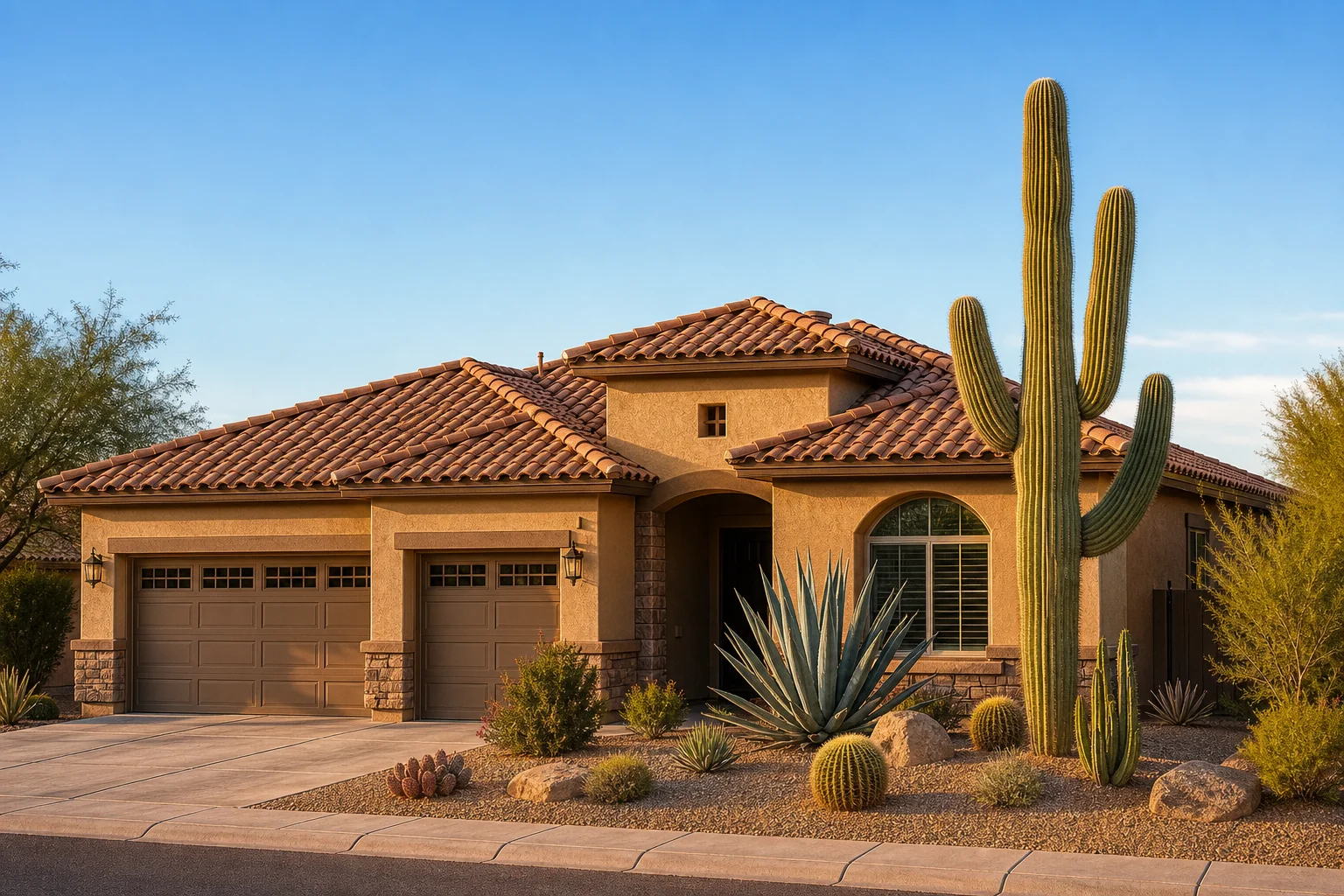
If cracked or missing tiles keep coming back after every monsoon season, you're not alone in asking whether to repair or replace your Arizona tile roof. For most homes past the 20-year mark, a full replacement through our Roofing Services delivers more value than another round of patch repairs.
By Tycho Solutions Team
Signs Your Tile Roof Needs More Than a Simple Roof Repair
A few loose tiles after a windstorm is normal wear. A pattern of broken tiles, granule loss, or the same leak returning every year is a different story. If your roofing contractor keeps coming back for the same trouble spot, that's usually a sign the underlying roof deck and underlayment are failing, not just the visible tile you can see from the ground.
Watch for these warning signs:
- Interior water stains that reappear after repairs
- Multiple sections of cracked or slipped tile across different slopes
- Sagging in the roof deck, visible from the attic or eave line
- A roof that's already had two or more roof repair visits in the past few years
- Visible daylight through the decking when viewed from inside the attic
One or two of these on their own might still respond to a targeted fix. Several together usually mean the roof, not just the tile, is at the end of its service life, and no amount of spot repair will change that math.
How Arizona Heat and Monsoon Storms Wear Down Tile Roofs
Arizona tile roofs take a different kind of beating than roofs in milder climates. Summer heat pushes roof deck temperatures well above the surrounding air, and that daily heat and cool cycle stresses the underlayment and fasteners long before the tile itself shows damage. Then monsoon season arrives with wind-driven rain that finds every gap the heat already opened up. Tycho Solutions has installed and maintained tile roofing across the Valley for years, and this pattern holds true on nearly every project we inspect.
Homeowners from Phoenix to Scottsdale to the East Valley see the same pattern: tile that still looks presentable from the ground while the material underneath has already broken down. That's why a roof inspection from a licensed roofing contractor matters more than a visual check from the driveway. The National Roofing Contractors Association recommends a professional inspection after any major storm event, since wind and hail damage isn't always visible from below. Tile generally holds up to Arizona's heat and UV exposure better than lighter-weight roofing materials, mainly because of its mass and the airflow gap beneath each tile, which keeps deck temperatures lower than materials that sit flush against the surface. That thermal advantage is a big part of why tile remains the preferred choice in this climate despite a higher upfront material cost, and it's covered in more depth against other roofing material comparison options for Arizona homes.
The Hidden Culprit: Underlayment Replacement Beneath the Tile
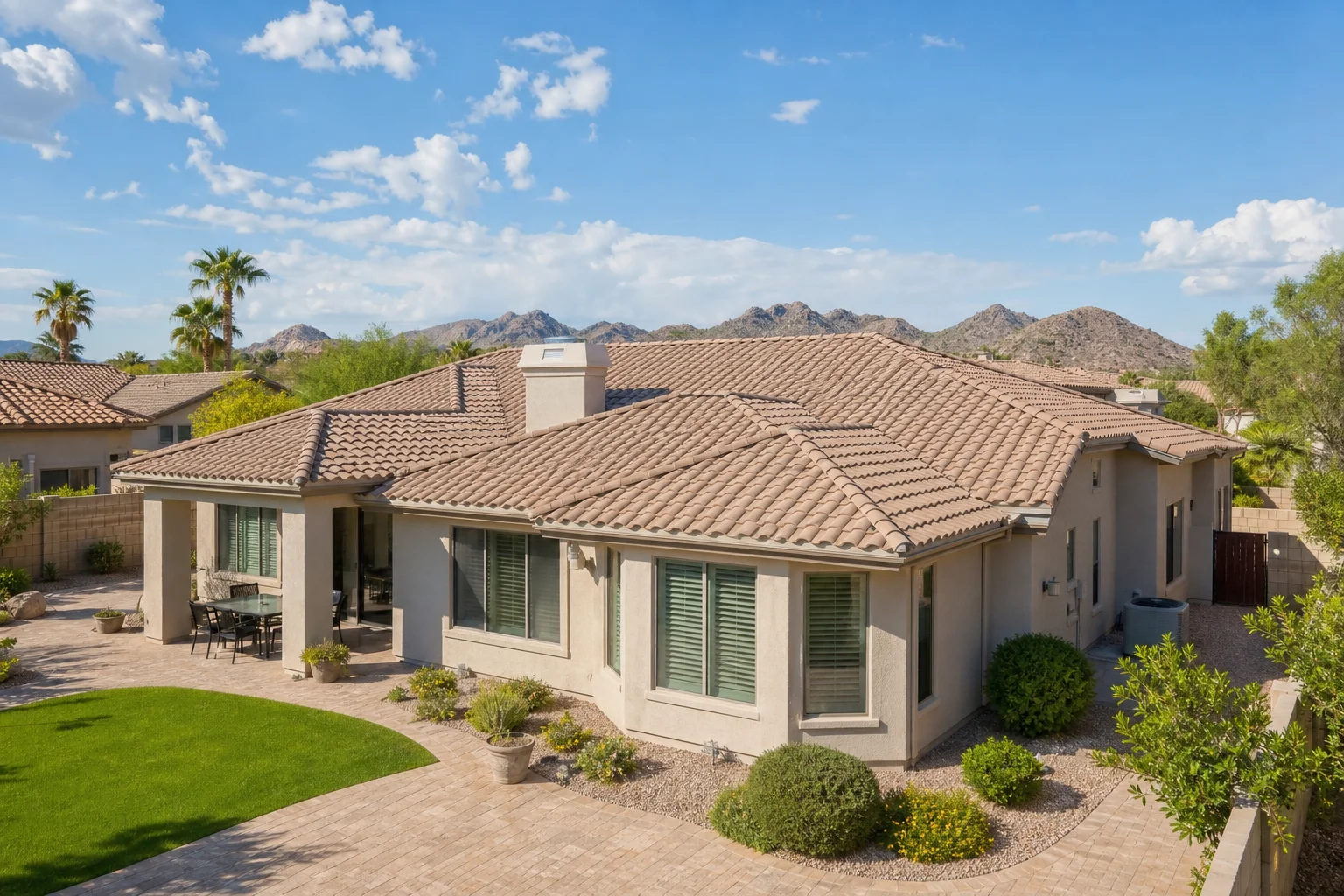
Tile is the shell. Tile roof underlayment is the actual waterproofing layer, and it's the piece homeowners can't see and often don't think about until water shows up inside the house. Arizona's heat shortens the useful life of underlayment considerably compared to milder regions, and once it starts failing, water can travel sideways under the tile and show up far from where the actual gap is.
This is why a repair that only replaces a handful of broken tiles can miss the real problem. If only one section of the roof shows staining, a contractor can sometimes isolate and address that area. But if underlayment failure shows up in multiple areas, patch work becomes a cycle of chasing leaks instead of solving them, because each repair only buys time on the one section it touches while the underlayment everywhere else keeps aging toward the same failure point. Underlayment condition, not the tile sitting on top of it, is what actually determines a roof's remaining service life, and it typically wears out well before the tile shows visible damage. Planning around underlayment replacement timing matters more than the condition of the tile itself.
What Repeated Roof Repair Visits Actually Cost You
Every roof repair visit has a cost beyond the invoice. Each time a crew walks tile to reach a trouble spot, there's a small risk of cracking sound tile nearby. Each round of interior water damage means drywall, paint, or insulation repair on top of the roofing work itself. And each repair only addresses the section it touches, leaving the rest of an aging underlayment system to fail on its own schedule.
Homeowners who track their repair history often find they've spent a meaningful share of a full replacement's cost chasing the same roof over several years, without ever solving the underlying problem. A licensed roofing contractor should be able to provide a repair history summary and an honest opinion on when that spending stops making sense compared to a full re-roof.
How to Decide: Repair or Replace Your Arizona Tile Roof
Deciding whether to repair or replace your Arizona tile roof comes down to three questions: how old is the roof, how widespread is the damage, and what condition is the underlayment in. A newer roof with an isolated issue is a reasonable repair candidate. A roof past 20 years old with underlayment failure in more than one area is a replacement conversation, even if the tile itself still looks fine from the curb.
What a Full Tile Roof Replacement Includes
A tile roof replacement strips the roof down to the deck, replaces the underlayment across the entire surface, reinforces any deteriorated decking, and reinstalls new tile using materials matched to your home's existing profile, salvaging sound existing tile where it fits and replacing what's cracked or missing. This resets the clock on the whole system instead of extending the life of components that are already compromised.
When a Targeted Repair Still Makes Sense
Tile roof repair can still be the right call for a younger roof with storm damage confined to one section, or for a roof that's had a recent underlayment replacement and just needs tile reset after a wind event. A licensed roofing contractor should provide a clear scope of what a repair will and won't fix before any work starts. Exact pricing for either path requires an on-site assessment, but full replacement costs generally scale with the size of the roof, how much of the existing tile can be salvaged instead of replaced, and how much deck repair the tear-off uncovers once the old underlayment comes off. A straightforward job with salvageable tile and sound decking lands toward the lower end of typical tile roof replacement cost ranges in this market, while extensive decking damage or a full tile swap pushes it higher.
Weighing repair replacement decisions gets easier once you know your roof's age and history. If your home falls within our service areas, from Chandler and Gilbert to Queen Creek and San Tan Valley, a professional inspection from a qualified Arizona roofing contractor is the fastest way to get a straight answer. Homeowners in Chandler roofing services and nearby communities can request a full evaluation before committing to either path. A professional inspection typically covers the roof deck, the underlayment where it's accessible, tile condition across every slope rather than just what's visible from the ground, and flashing at valleys and penetrations. Storm damage in particular often isn't visible from the ground, which is why scheduling that inspection right after a major wind or hail event, rather than waiting for a leak to show up inside, is what actually keeps roof inspection cost from turning into a repair bill instead.
Frequently Asked Questions
How do I know if my tile roof needs replacement instead of repair?
Look at the pattern, not just one leak. If damage is spread across multiple sections, if underlayment failure shows up in more than one area, or if the roof is past 20 years old, replacement usually delivers better long-term value than repeated repairs to the same aging system. A professional roof inspection is the fastest way to get a clear answer specific to your home.
Does Tycho Solutions do small tile roof repairs?
Tycho Solutions focuses on full roofing services and whole-system replacement rather than minor patch repairs. If your roof needs a full evaluation, we'll walk you through whether a targeted fix or a complete re-roof makes sense for your situation, and explain the reasoning behind that recommendation.
How long does a full tile roof replacement take?
Timelines depend on roof size, tile availability, and weather, so an exact schedule comes from your project assessment. Your contractor should provide a written timeline before work begins, along with a clear sequence for tear-off, underlayment installation, and tile reset.
Is underlayment replacement always necessary during a re-roof?
In almost all cases, yes. Underlayment is the actual waterproofing layer, and reusing old underlayment under new tile defeats the purpose of a full replacement. A reputable contractor will always replace it as part of the job, since leaving old underlayment in place undermines the entire system.
Do I need a permit for a tile roof replacement in Arizona?
Most Arizona municipalities require a permit for full roof replacement. A licensed roofing contractor handles this as part of the project scope, so it shouldn't be something homeowners need to manage themselves during the process.
Schedule Your Free Roof Assessment
Whether your roof needs a full replacement or a targeted fix, the only way to know for sure is a professional look at the deck and underlayment, not just the tile. Get a Free Estimate and find out which path actually makes sense for your home.