



The most effective ways to reduce heat gain through your windows in summer are window films, cellular shades and other window treatments, exterior shading, and high-performance replacement glass. For Arizona homeowners dealing with intense summer heat, combining two or more of these strategies delivers the best return on cooling costs. Windows & Doors replacement remains the most durable long-term solution.
By Tycho Solutions Team
Why Arizona Glass Lets In So Much Solar Heat
Phoenix summers routinely exceed 110°F, and glass is one of the weakest links in any home's thermal envelope. Older windows with degraded seals, and especially single-pane glass, allow solar radiation to pass through with minimal resistance. South-facing windows and west-facing exposures collect the most direct sunlight during peak heat hours, and an unshaded window can raise nearby indoor surface temperatures measurably within minutes of the afternoon sun hitting it.
The mechanism is rooted in the solar spectrum. Sunlight delivers energy across visible and near-infrared wavelengths. Glass transmits most visible light and a significant share of the near-infrared band. That near-infrared energy is the primary driver of indoor heat buildup. Once it crosses the glass plane and strikes interior floors, walls, and furniture, it converts to heat and raises room temperature. Your HVAC Systems then run longer and harder to remove that accumulated heat, burning more electricity during the hottest parts of the day than they would if that heat had never entered at all.
Reducing that inflow at the glass itself, before it becomes a cooling load, is far more efficient than cooling heated air after the fact.
Window Films: Intercepting Solar Heat Before It Enters
Solar window films are thin polyester or ceramic coatings applied to existing glass surfaces. They reflect a portion of incoming solar radiation, particularly near-infrared wavelengths, before it can transmit into your living space. For homeowners looking to save energy and reduce heat gain through your windows in summer without structural changes, quality window films are often the most accessible starting point.
Several film categories are available. Reflective films bounce sunlight back off the glass surface. Neutral ceramic films filter heat while preserving a more natural light quality inside. Lower-cost metallized options suit budget-sensitive applications. South-facing windows, west-facing glass patio doors, and skylights are the highest-priority targets for film treatment in Arizona homes.
Practical limits apply in this climate. Arizona's UV intensity degrades films faster than in cooler states, and adhesive failures are common after several years of intense sun exposure. If your windows already have failing seals, warped frames, or outdated glass formulations, a film may extend their usable life by a season or two, but it does not correct the underlying structural energy losses those issues create. Window films work best as a useful interim measure, not a permanent substitute for properly performing glass.
Window Treatments That Block and Filter Direct Sunlight
Window treatments cover the broadest range of products used to control how much sunlight enters your home. The right choice depends on your window orientation, room function, and the balance between light preservation and heat reduction you need.
Cellular Shades for Maximum Thermal Insulation
Cellular shades, also called honeycomb shades, use a series of geometric air pockets positioned between your heated glass and your cooled interior. That trapped air acts as a thermal buffer, slowing both radiative and conductive heat transfer. Unlike standard blinds or curtains, cellular shades address both solar radiation and conduction through warm glass at the same time. Double-cell and triple-cell configurations provide progressively more insulation, making cellular shades among the most effective interior window treatments for energy efficiency in desert climates. They perform particularly well in south-facing and west-facing rooms where summer heat accumulates most aggressively.
Exterior Roller Shades and Awnings
The most direct way to reduce heat from reaching your glass at all is to intercept sunlight before it arrives. Exterior roller shades, retractable awnings, and fixed canopies stop direct sunlight before it becomes solar heat on the glass surface. West-facing glass doors and south-facing windows benefit most from this approach during peak afternoon hours. Pairing exterior shading with interior cellular shades creates a two-layer system that cuts both radiant and conductive transfer substantially.
Curtains and Standard Blinds
Heavy curtains with thermal or blackout backing can block a meaningful share of incoming solar radiation and provide a degree of insulation. They are less effective than cellular shades at slowing conductive heat transfer from warm glass, but they are practical for rooms where privacy and light control matter alongside heat management. Standard horizontal blinds offer adjustable light control with minimal insulation value compared to honeycomb-style window treatments.
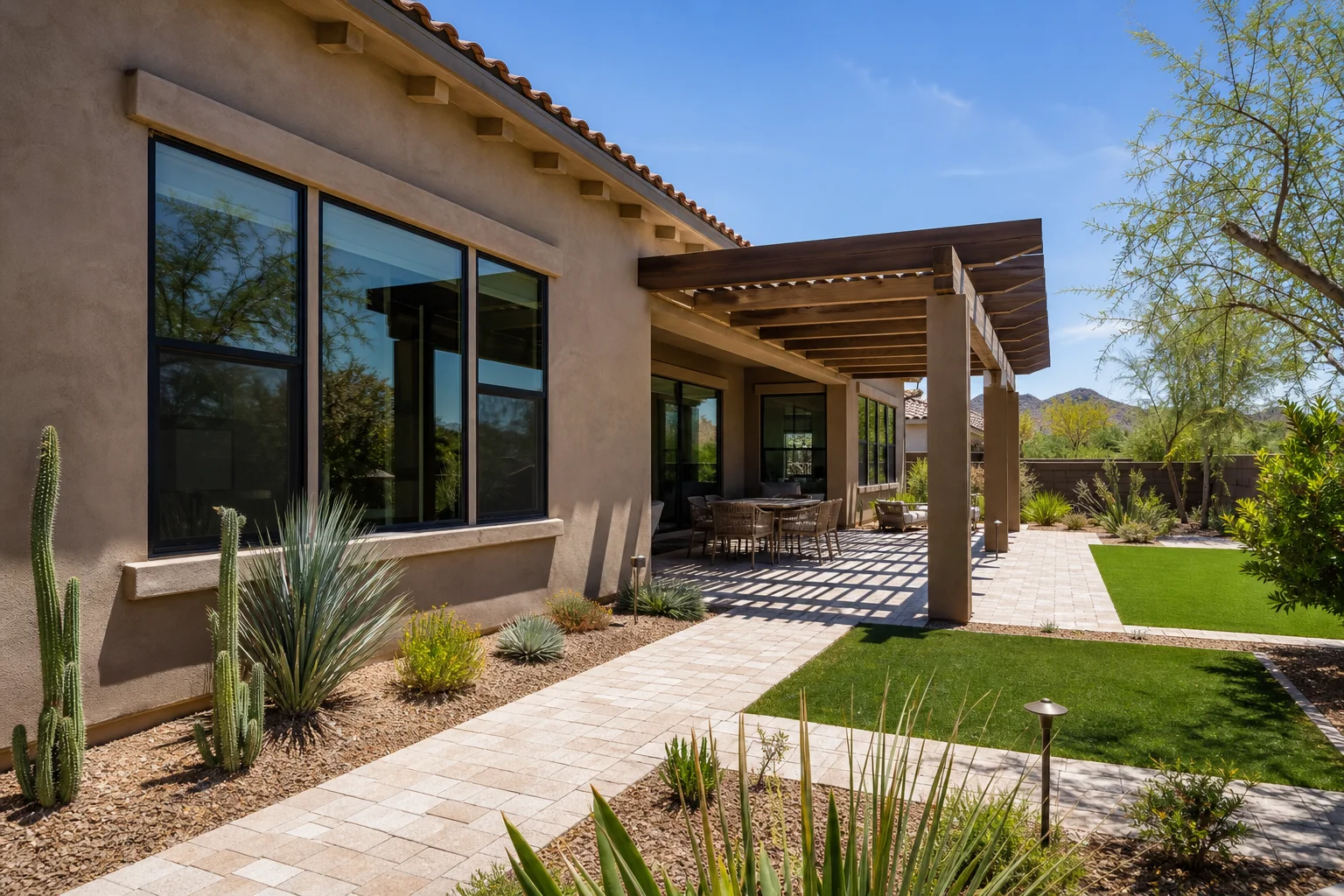
Reducing Heat Gain Through Your Windows in Summer: The Case for New Glass
Retrofit treatments improve existing windows, but replacing them with high-performance units addresses solar heat gain at the structural level. Modern windows built for desert climates incorporate Low-E (low-emissivity) glass coatings that reflect near-infrared wavelengths while still transmitting visible light clearly. The result is glass that looks transparent but rejects a significant portion of the solar energy that drives indoor heat accumulation.
High-performance Low-E glass packages designed for Arizona's desert exposure represent a meaningful upgrade over standard clear double-pane glass. Combined with thermally broken frames that interrupt conductive heat transfer through the frame material itself, replacement windows reduce cooling loads across the entire home rather than addressing one room at a time. Because the improvement is structural, it delivers energy efficiency gains that compound across every summer season. A manufacturer-backed warranty covers the glass unit and assembly, protecting the investment well beyond what any retrofit treatment can offer.
Pairing Window Upgrades With Whole-Home Energy Strategy
Windows are a critical lever for managing summer heat, but they perform best as part of a coordinated whole-home approach. Roof condition, attic insulation depth, and overall air sealing all determine how much of the cooling benefit any window upgrade can deliver in practice.
A well-performing roof and properly insulated attic prevent radiant heat absorbed at the rooftop from descending into living spaces, reinforcing the gains made by better glass. Pairing efficient windows with a solar energy system creates layered savings: panels reduce your grid draw during peak cooling hours, while better glass reduces how much cooling the home requires in the first place. Arizona homeowners who combine these upgrades typically realize the greatest reduction in summer energy spend and the fastest overall payback. Both strategies reward thoughtful planning before the season peaks rather than reactive purchases once temperatures are already climbing.
Frequently Asked Questions
Do window films actually save energy in Arizona's climate?
Quality solar window films can reduce heat gain on existing glass and contribute to lower cooling costs, particularly on south and west exposures. Ceramic films targeting near-infrared wavelengths provide strong heat rejection without heavy tinting. However, Arizona's UV intensity shortens film lifespan relative to cooler climates, and films do not correct failing seals or structural frame issues. They work best as a short-term measure on windows that are otherwise structurally sound.
What window treatments are most effective for blocking summer heat?
For energy efficiency and heat control, cellular shades consistently outperform standard blinds and curtains because they create an insulating air buffer directly alongside the glass. Pairing interior cellular shades with exterior roller shades or awnings on south and west exposures delivers the most complete coverage for intense summer heat. Heavy blackout curtains are a practical lower-cost option for rooms where full light blockage is acceptable.
Do new windows lower air conditioning costs enough to justify replacement?
Yes. Research from Lawrence Berkeley National Laboratory (Arasteh et al., 2006) found that heat gain and heat loss through windows accounts for 25 to 30 percent of residential cooling energy use in hot climates. Replacing older windows with Low-E units designed for Arizona exposure directly reduces that load, lowers how often your air conditioner cycles, and improves comfort in the rooms with the most glass exposure.
Are south-facing windows worse than west-facing ones for solar heat gain?
Both create significant solar heat gain, but west-facing windows often produce the most uncomfortable accumulation because direct sunlight strikes them during the hottest afternoon hours. South-facing windows receive consistent exposure throughout the day. Both benefit from window films, cellular shades, and exterior shading. When prioritizing upgrades, addressing west exposures typically delivers the fastest comfort improvement.
How do I know when window treatments alone are no longer enough?
If your windows show visible seal failures, fogging between panes, warped or cracked frames, or drafts noticeable even with treatments in place, retrofit solutions cannot offset the underlying losses. These signs indicate heat transfer through the glass and frame assembly has exceeded what any film or shade can address, and a structural window assessment is the right next step.
Get Your Arizona Home Ready Before Peak Cooling Season
Managing how to reduce heat gain through your windows in summer is one of the highest-impact improvements an Arizona homeowner can make before temperatures peak. Whether you are starting with window films and cellular shades or evaluating a full replacement, Get a Free Estimate from the Tycho Solutions team to find the combination of upgrades that fits your home and budget.