


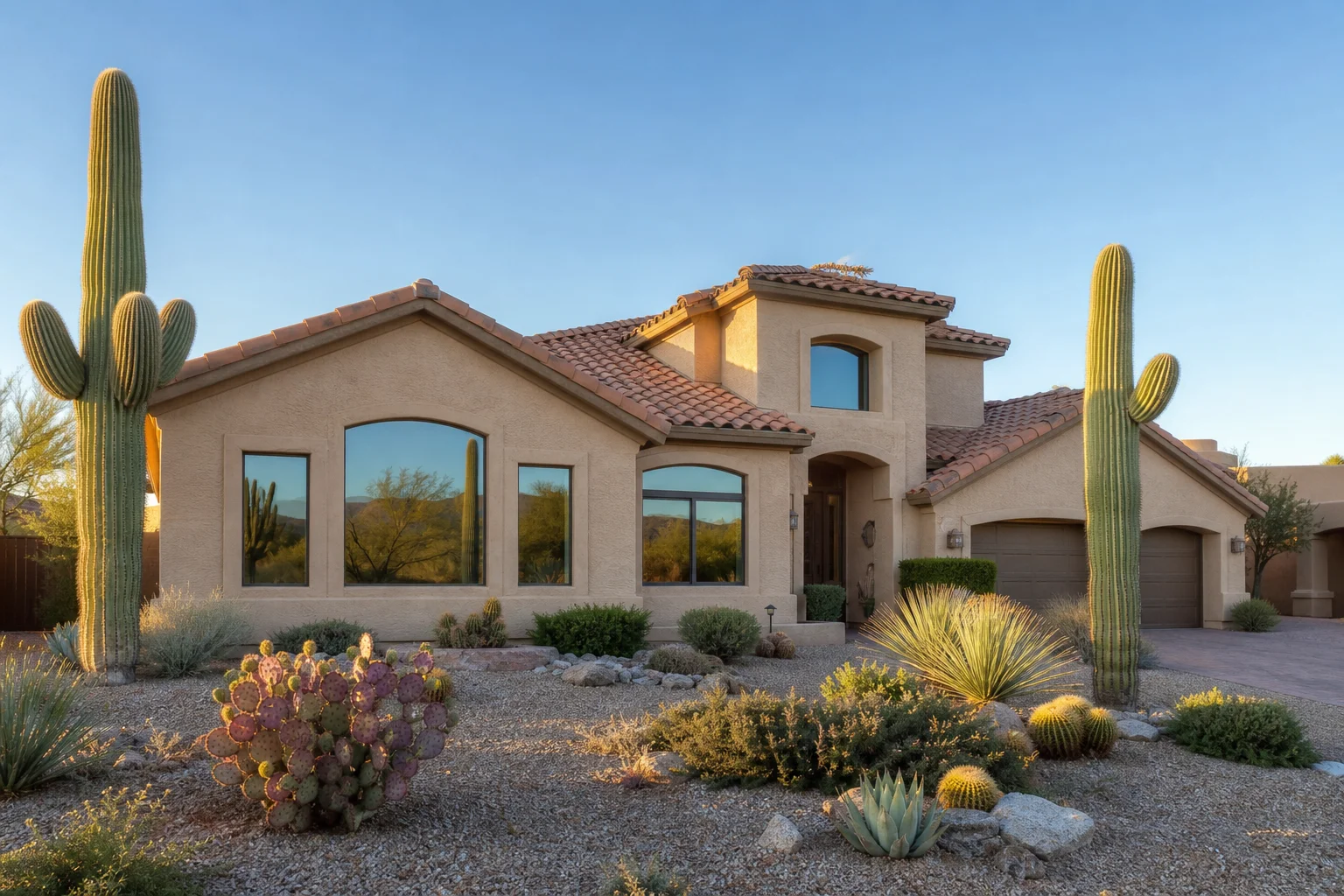
Choosing the best windows for Arizona heat means selecting frames and glass packages engineered to block intense solar energy, keep conditioned air inside, and hold up through decades of desert sun exposure. For Windows & Doors replacement projects across the Valley, vinyl and fiberglass are the two most proven options for arizona homes.
By Tycho Solutions Team
Arizona heat is not a seasonal inconvenience. In the Phoenix metro, summer temperatures regularly exceed 110 degrees Fahrenheit, and walls and roof surfaces absorb radiant energy for eight or more months a year. Windows are the weakest thermal link in the building envelope. According to research from Lawrence Berkeley National Laboratory (U.S. Department of Energy, 2020), windows account for roughly 25 to 30 percent of residential heating and cooling energy use. In a desert climate, poorly matched windows compound that number significantly.
The core problem is heat gain. Solar radiation passes through glass and converts to heat inside the home, measured by the Solar Heat Gain Coefficient (SHGC). A lower SHGC means less solar heat entering the home. For arizona homes facing west or south, selecting windows with a low SHGC is one of the highest-impact decisions before a full window replacement project.
Frame material matters as much as glass performance. Different materials expand and contract at different rates under extreme thermal cycling. A frame that performs well in a temperate climate may warp, crack, or develop air leaks in Phoenix summers.
Vinyl Windows: The Top Choice for the Windows Arizona Market
When it comes to the best windows for arizona heat at an accessible price point, vinyl is consistently the answer. The material does not conduct heat the way metal does, which means less thermal transfer between outdoor air and the interior frame. Vinyl also resists moisture, requires no painting, and holds its color through prolonged sun exposure.
Modern vinyl window replacement systems use multi-chamber frame construction that creates insulating air pockets inside the frame, adding thermal resistance. Combined with low-SHGC glass packages designed for high-solar climates, a quality vinyl installation can meaningfully reduce air conditioning load across a Phoenix summer.
Vinyl is also cost-accessible. When homeowners weigh the full lifecycle cost, including lower energy bills, reduced maintenance, and manufacturer-backed warranty coverage, vinyl delivers strong value at the residential price point.
One note for the Arizona market: not all vinyl windows are manufactured to the same standard. A vinyl window optimized for a mild climate is not the same product as one built to handle sustained 110-degree days and intense UV radiation. Ask your contractor about the product's desert-climate performance rating before committing to a replacement.
Aluminum Windows: Durability and Strength in the Desert
Aluminum windows carry a reputation for structural strength and slim sightlines. The frames are rigid, resistant to physical impact, and well-suited to larger opening spans. In commercial construction and certain contemporary arizona homes, aluminum frames remain preferred for their clean profile and long service life.
The trade-off in a high-heat environment is conductivity. Aluminum conducts heat readily, meaning an untreated frame can act as a bridge for exterior heat to enter the home. The solution in modern aluminum window replacement is thermal break technology: a barrier of low-conductivity material inserted inside the frame that interrupts direct metal-to-metal heat transfer.
For homeowners who want aluminum windows in arizona, thermal break aluminum is the specification to request. Without it, energy efficiency gains from high-performance glass are partially offset by frame conduction. With it, aluminum windows perform significantly better under arizona heat and remain a viable option where structural requirements or design aesthetics drive the choice.
Aluminum's stiffness also helps it maintain its original geometry over a longer service life, which matters in the relentless heat gain environment of a Phoenix summer.
Fiberglass Windows: High Performance for Extreme Sun Exposure
Fiberglass is the premium tier in residential window replacement. The material expands and contracts at nearly the same rate as the glass it holds, keeping the seal between frame and glass more consistent through extreme temperature swings. That characteristic is especially valuable in Arizona, where day-to-night temperature differentials can span 40 degrees or more.
Fiberglass frames are extremely strong for their cross-section, allowing thinner profiles without sacrificing structural integrity, which means more glass area and broader sightlines. The material does not rust, does not warp, and accepts paint well.
From an energy efficiency standpoint, fiberglass is among the best window frame options for arizona homes. Its low thermal conductivity, combined with multi-pane glass packages tuned for solar heat gain control, makes it a top performer for homeowners focused on long-term reductions in energy bills.
The primary consideration is cost. Fiberglass windows typically carry a higher upfront price than vinyl. For homeowners planning to remain in their Arizona home for many years, the durability and performance case is strong. For a standard replacement on a tighter budget, vinyl remains the practical answer.
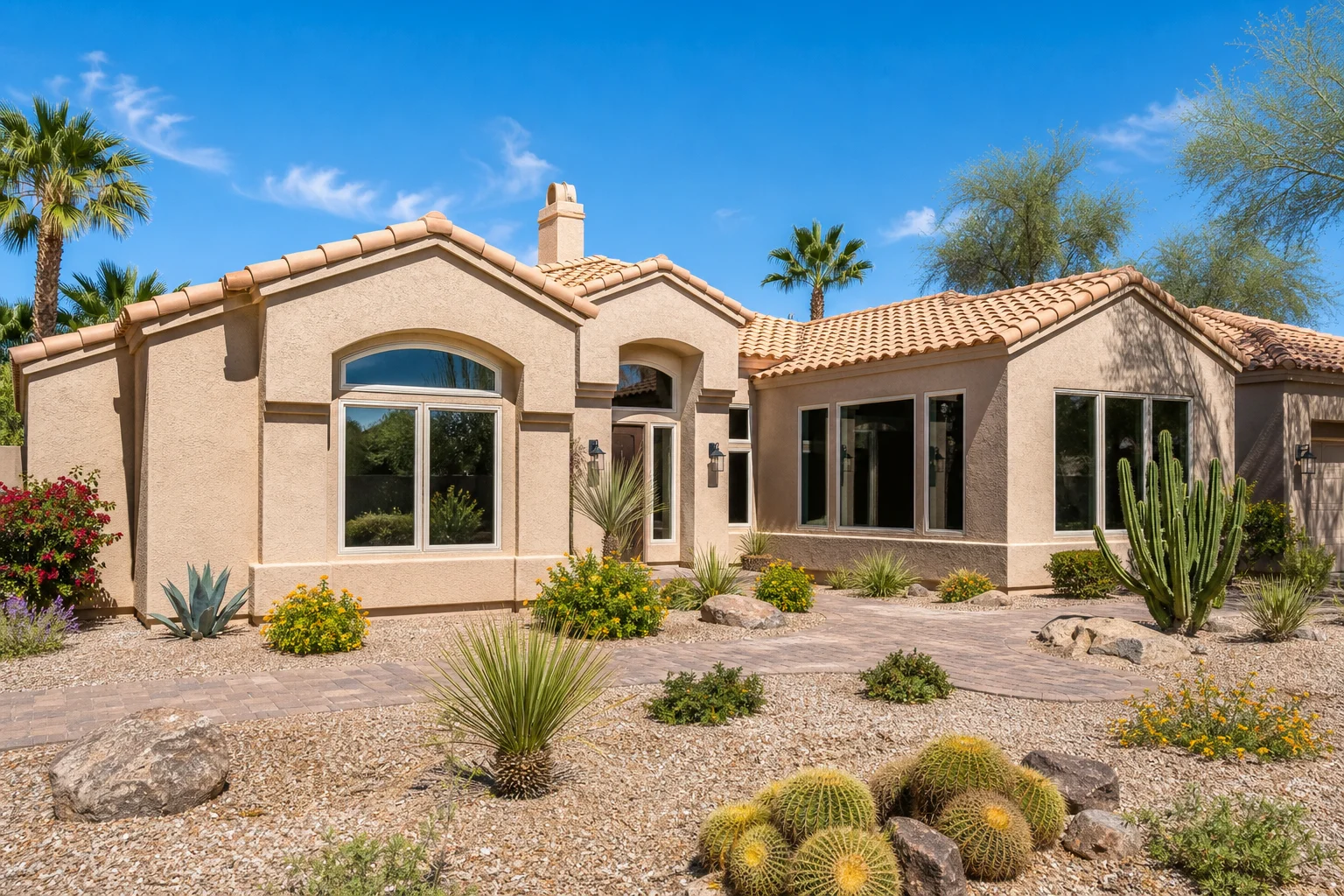
How SHGC and Glass Coatings Reduce Heat Gain in Arizona Homes
The solar heat gain coefficient (SHGC) measures how much solar radiation passes through a window and enters the home as heat. A lower SHGC means less solar heat entering the living space. A higher SHGC raises the cooling load directly.
For most Arizona homes in IECC Climate Zone 2, which covers the Phoenix metro and much of the low desert, Energy Star certification requires an SHGC meeting the published regional threshold. Pairing low-SHGC windows with a correctly sized HVAC Systems installation compounds the efficiency benefit on both sides of the building envelope.
Low-E glass coatings are the technology behind low-SHGC performance. A thin metallic oxide layer on the glass surface reflects a portion of infrared and ultraviolet radiation before it enters the home as heat, admitting visible light while blocking a significant share of unwanted heat gain.
Ask your contractor about the SHGC rating for any window under consideration, and request glass packages designed for desert exposure rather than general residential use.
How Window Replacement Reduces Cooling Costs Over Time
A window replacement project changes the thermal behavior of the home for decades. Older single-pane windows, or degraded double-pane units with failed seals, allow substantial heat transfer. In summer that means more heat gain pushing up the cooling load. In winter it means conditioned air escaping through degraded glass and frame interfaces.
Research published by the American Council for an Energy-Efficient Economy (2019) found that upgrading from single-pane to high-performance double-pane windows in hot climates can reduce window-related heat transfer by a substantial margin. The exact impact depends on the home's window-to-wall ratio, orientation, and current HVAC system efficiency.
Beyond energy savings, new windows eliminate air leaks that develop as older frames age and shift. A properly installed full-frame replacement seals the rough opening, flashes the perimeter, and closes gaps that allow conditioned air to escape.
For homeowners also exploring solar energy upgrades, completing a window replacement first reduces the home's baseline cooling load, making it possible to size a solar system more accurately.
Frequently Asked Questions
What is the best window for Arizona heat?
Vinyl and fiberglass are the top two choices for arizona homes in high-heat climates. Vinyl delivers strong energy efficiency at an accessible price. Fiberglass offers premium performance and durability at a higher upfront cost. Both outperform standard untreated aluminum for desert climates where sun exposure is sustained and intense across most of the calendar year.
What SHGC should I look for in replacement windows for Arizona?
For the Phoenix metro and surrounding desert communities, look for windows with a low SHGC rating appropriate for IECC Climate Zone 2. A lower SHGC means less solar heat gain entering the home. Your contractor can confirm the right specification for your home's orientation and exposure. The correct value depends on the product and installation details.
Are vinyl windows durable enough for Arizona summers?
Quality vinyl windows manufactured for hot climates are engineered to handle sustained heat and UV radiation without warping or significant color fade. The key is confirming the product is rated for desert-climate conditions. Ask your contractor which product line is being installed and how it performs under sustained arizona heat compared to general residential ratings.
How do I know if my current windows need full replacement?
Signs that point toward a full window replacement include visible frame deterioration, fogged or clouded glass between panes indicating failed seals, noticeable air leaks at the perimeter, and significantly higher energy bills despite a functioning HVAC system. Tycho Solutions specializes in full replacement projects, not patch repairs.
Do new windows perform better when paired with other home upgrades?
Yes. Windows are part of a connected building envelope. Pairing a window replacement with upgraded insulation and a correctly sized HVAC system delivers compounding efficiency gains across heating and cooling seasons. Addressing one system while leaving others degraded limits the overall performance benefit of each individual upgrade.
Replace Your Windows Before the Next Arizona Summer Hits
The right frame and glass package for your arizona home depends on your budget, your home's orientation, and your long-term plans. Get a Free Estimate from Tycho Solutions to find out which window replacement option will perform best for your specific exposure and goals.