


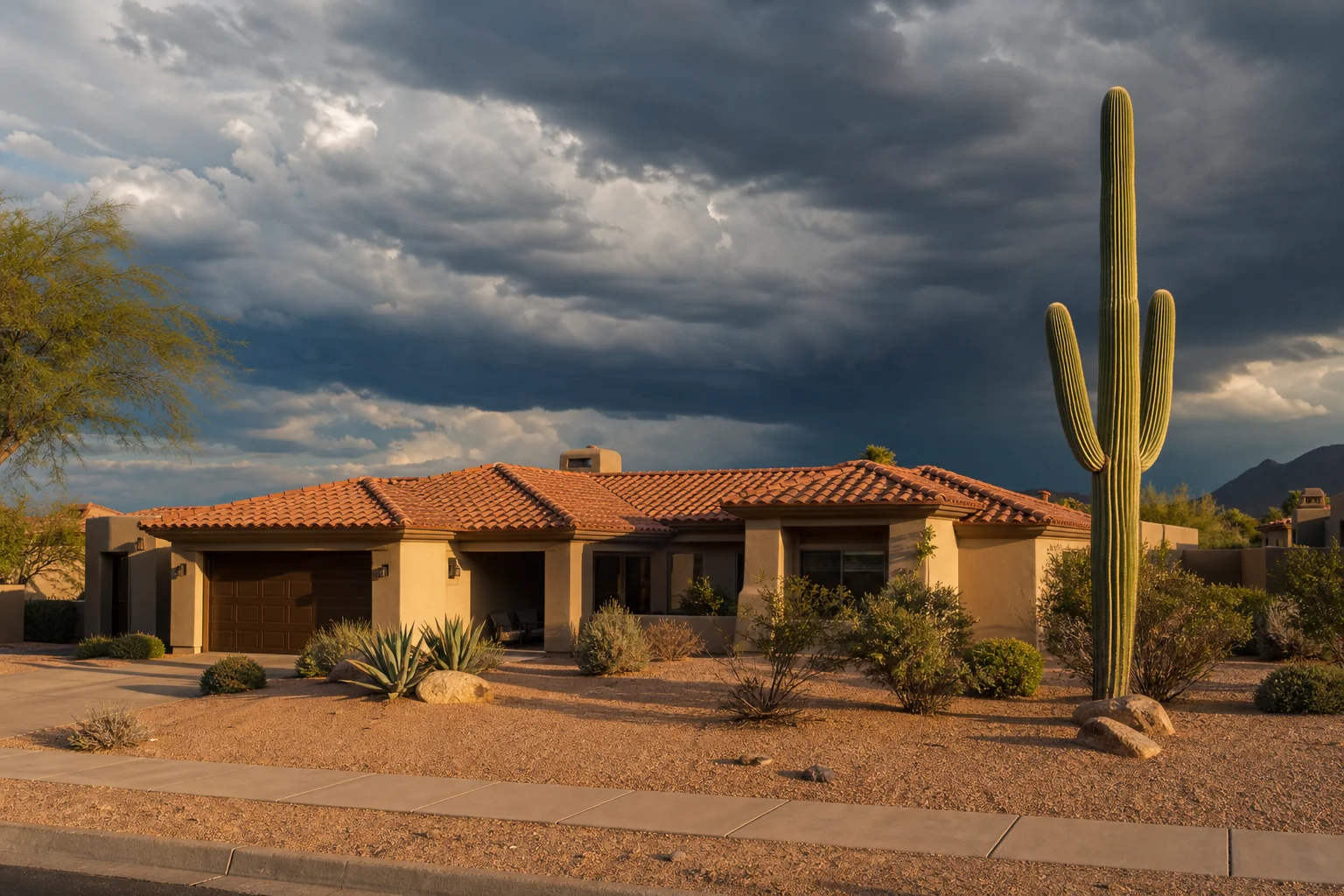
Knowing how to prevent roof leaks before monsoon season can save Phoenix-area homeowners thousands in storm-related repairs. A scheduled Roofing Services inspection, combined with clearing debris, addressing flashing, and replacing missing shingles, gives your roof the best foundation to handle Arizona's intense summer storms without damage.
By Tycho Solutions Team
Why Monsoon Season Is a True Test for Arizona Roofs
Arizona's monsoon season runs from mid-June through September and brings heavy rain, sustained winds, and wind-driven debris in rapid succession. Unlike a slow, steady drizzle, monsoon storms drop precipitation at rates that overwhelm weakened roofing systems within minutes.
The combination of heavy rains and gusts that regularly exceed 60 miles per hour can dislodge shingles, lift flashing edges, and force water into attic spaces before a storm has even passed. Catching issues early prevents minor vulnerabilities from becoming full-scale water intrusion events that damage framing, drywall, and insulation across your home.
How to Prevent Roof Leaks Before Monsoon Season Starts
The foundation of effective roof maintenance is a professional inspection completed before the season starts. A trained roofer identifies problems that are invisible from the ground: hairline cracks in flashing, lifting shingles, deteriorating underlayment edges, and blocked drainage paths.
Homeowners who skip seasonal checks on their roofing system consistently face the worst outcomes when storms arrive. An inspector can determine whether specific sections need attention as part of a broader roof repair or replacement scope, or whether the entire system is approaching end of life. Inspections scheduled in April or early May give contractors enough lead time to complete work before the first heavy rain of the season.
For homeowners across the East Valley, Roofing in Chandler, AZ and the surrounding communities see high inspection demand each spring, so booking early ensures availability before the seasonal rush.
Clear Branches, Debris, and Clogged Gutters
Debris accumulation is one of the most overlooked causes of roof leaks. Branches, leaves, and sediment collect in roof valleys and gutters over winter and spring, blocking the drainage channels your roof depends on to shed heavy rain quickly.
Clogged gutters force water to back up along the roof edge, saturating roofing materials and creating the conditions that lead to a roof leak. During heavy rains, overflowing gutters push water down fascia boards, into soffit cavities, and eventually through interior walls.
Before monsoon season, complete these steps:
- Remove all branches and loose debris from the roof surface.
- Clean gutters fully and confirm that downspouts direct water away from the foundation.
- Inspect low-slope sections where debris and standing water tend to collect.
- Make sure drainage around all roof penetrations and vents is clear.
This work prevents the standing water conditions that damaged roof materials over time and sets up your drainage system to handle the sudden volume of a monsoon downpour.

Check Flashing, Vents, and Missing Shingles
Flashing seals the joints where your roof meets walls, chimneys, and penetrations. It is also one of the first places a damaged roof reveals weakness, because metal flashing expands and contracts with Arizona's extreme temperature swings and eventually develops gaps that admit wind-driven rain.
During your pre-season check, look for:
Missing shingles: Any absent or displaced shingles expose the underlayment directly to rain. Missing shingles are a near-certain source of roof leaks if storms arrive before they are replaced.
Lifted or cracked flashing: Gaps at vent pipes, skylights, and chimney bases allow wind-driven water to enter the roof deck and accelerate water damage.
Curling or brittle shingles: These signal age-related deterioration that strong monsoon winds will accelerate significantly.
Damaged vent covers: Cracked or missing screens on roof vents allow rain and debris to enter the attic space.
A thorough roof repair evaluation determines whether these problem areas require a targeted replacement section or a full re-roofing project. Tycho Solutions focuses on comprehensive replacement solutions, not minor patches, to ensure the entire system holds under monsoon conditions.
Protect Your Attic and Stop Hidden Water Damage
The attic is where roof leaks often go undetected the longest. By the time a water stain appears on a ceiling, moisture has typically been present in the attic for long enough to promote mold growth and begin weakening structural wood.
Before monsoon season, inspect your attic for:
- Water stains or dark discoloration on sheathing and rafters.
- Any signs of mold or musty odors indicating ongoing moisture intrusion.
- Visible daylight through the roof deck, which signals a gap or failed roofing section.
- Adequate airflow through vents, because proper ventilation reduces the heat buildup that shortens shingle life.
Addressing attic issues before the season begins protects the entire roofing system. Moisture that goes unaddressed through one monsoon season compounds into deeper structural problems during rains the following year.
When Roof Repair Points Toward Full Replacement
When an inspection reveals multiple failing sections, widespread missing shingles, or attic water damage across several areas, the honest conversation shifts from repair to replacement. Spot repairs on a roof that has reached end of life only extend the problem rather than resolve it, and they typically cost more in total than a single properly executed replacement.
Monsoon storms do not spare a partially compromised roof. Heavy rains and sustained winds find every weak point. A complete new roofing system installed before the season means every section, every seam, and every penetration is sealed as a unit and ready for whatever storms arrive.
Understanding how to prevent roof leaks before monsoon season means recognizing when a system has aged past the point where targeted repairs provide lasting protection. If an inspection surfaces those issues early, completing a full replacement before June gives your home coverage through the entire storm season.
Frequently Asked Questions
How early before monsoon season should I schedule a roof inspection?
Schedule your inspection by late April or early May at the latest. Inspection demand across the Phoenix area increases sharply through May and June, so booking early ensures you can secure a date and have any needed replacement work completed before the first heavy rains arrive. Starting in early spring also allows time for permitting and material lead time on full roof replacements.
What are the most common signs of a roof leak in an Arizona home?
Water stains on interior ceilings, damp attic sheathing, peeling paint near the roofline, and musty smells in upper rooms are the most common signs. Exterior indicators include missing shingles, granule loss visible in gutters, and visible gaps in flashing around chimneys or vents. Any of these warrant a professional inspection before monsoon season to assess the full scope of damage.
Can patching individual spots prevent roof leaks during heavy rains?
Tycho Solutions does not perform minor patch repairs. When a roof has multiple problem areas, patching individual spots leaves the surrounding system vulnerable during heavy rain events. A professional inspection determines whether the work falls within a re-roofing scope or requires a full system replacement to provide lasting protection through the monsoon season and beyond.
How do clogged gutters lead to roof leaks?
Clogged gutters prevent water from draining freely off the roof, causing it to pool along the edge. That standing water saturates roofing materials, works under shingles, and reaches the underlayment and decking below. Over time, recurring exposure leads to water damage, roof edge deterioration, and rot in the decking that creates structural problems extending well beyond a surface leak.
What happens to a damaged roof during a monsoon storm?
A damaged roof faces multiple simultaneous stresses: high winds that loosen and remove shingles, heavy rain that exploits any gap in flashing or the roof deck, and wind-driven debris that can displace materials. Even a roof that survived previous seasons can fail abruptly when monsoon storms expose pre-existing weakness not addressed during routine roof maintenance.
Get Your Roof Ready Before the Storms Arrive
A proactive approach to how to prevent roof leaks before monsoon season is the most cost-effective decision an Arizona homeowner can make each spring. If a professional inspection reveals missing shingles, failing flashing, or signs of attic water damage, completing a comprehensive roofing replacement before June means you enter the entire monsoon season protected rather than reactive. Get a Free Estimate and find out exactly where your roof stands before the first heavy rains arrive.