


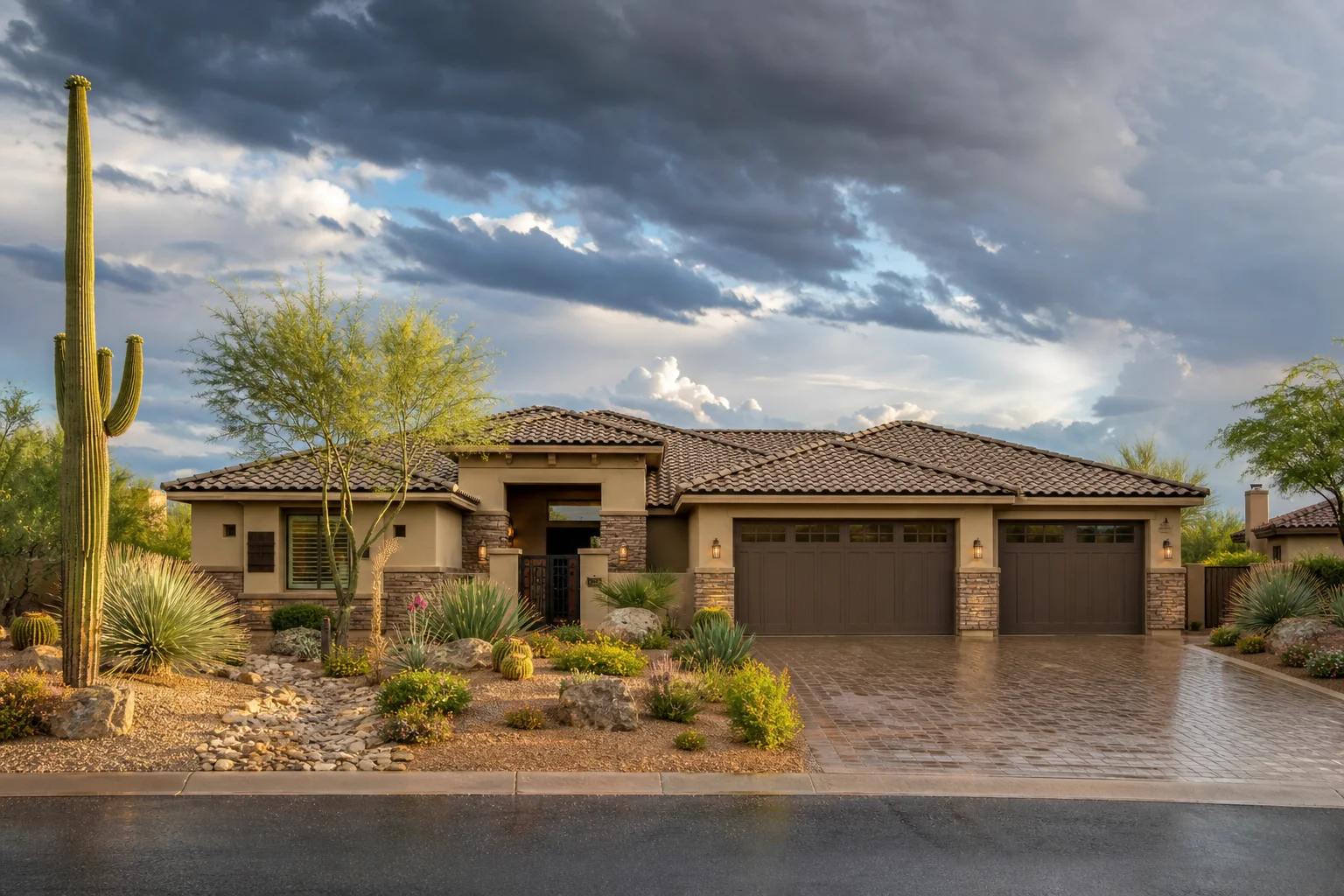
Monsoon roof damage in Arizona strikes fast, often leaving cracked tiles, displaced shingles, and hidden water intrusion before a homeowner notices anything inside. Every arizona monsoon storm is reason enough to inspect above and around your home. Tycho Solutions' Roofing Services delivers the thorough inspections and long-term solutions Valley homes need.
By Tycho Solutions Team
Why Arizona Monsoon Season Is So Punishing on Roofs
Arizona monsoon season runs from mid-June through late September, bringing sudden wind gusts, torrential rain, and occasionally hail to communities across Maricopa and Pinal counties. National Weather Service records document gusts topping 60 mph during haboobs and embedded thunderstorms, and those conditions accelerate roof damage faster than any other regional weather pattern.
Unlike steady rain in other climates, the arizona monsoon arrives in violent bursts. Roofs absorb intense UV exposure all day, which dries and contracts roofing materials, then face saturating downpours within hours. That thermal cycling weakens sealants, lifts tile flanges, and opens micro-cracks in aging shingles. Flying debris, including broken branches, gravel, and windborne material caught in gusts from neighboring yards, creates direct impact points that crack tiles or strip ridge caps.
The combination of high winds, flying debris, and sudden heavy rain is exactly why post-storm roof inspections matter. Waiting until a leak appears inside home means hidden moisture may have already reached the decking and insulation.
The Most Common Signs of Monsoon Roof Damage in Arizona
Monsoon roof damage in Arizona follows predictable patterns once you know what to look for. A post-storm survey, even from ground level, reveals most of the critical warning signs.
Displaced or Cracked Tiles and Shingles
Concrete and clay tile roofs are the arizona roof standard for good reason: they handle heat and shed water effectively. Individual tiles can crack on impact or slide out of position when high winds get under an edge. Asphalt shingles on lower-slope sections are vulnerable to granule loss and tab separation during any significant monsoon roof event. Both failure types create openings for water intrusion.
Storm Damage to Flashings and Ridge Caps
Metal flashings at valleys, penetrations, and chimney bases are the most common entry point for roof leaks. Strong winds pry up loose flashing edges, and once the seal breaks, even light rain drives water underneath. Ridge caps, which seal the peak of the roofline, are often the first components flying debris dislodges during a storm.
Clogged or Damaged Gutters
Gutters that fill with monsoon debris, leaves, and granules from worn shingles stop draining properly. Standing water at the fascia line contributes to moisture problems along eaves and can cause rot in the underlying roof deck over time. After any arizona monsoon storm, clear gutters and confirm downspouts are routing water away from the foundation.
Pooling Water on Low-Slope Sections
Flat or low-slope sections, common on Southwestern-style homes, collect standing water when drains are blocked by debris. Ponding accelerates membrane breakdown and is a leading cause of roof leak water damage after monsoon season.
How to Conduct a Safe Post-Storm Roof Inspection
Start with a ground-level visual survey before calling a contractor. Walk the full perimeter and note:
- Broken tiles or shingles on the ground or in landscaping
- Visible ridge cap pieces missing from the roofline
- Gutters pulled away from fascia or packed with debris
- Dark staining on exterior stucco walls below roof edges, a sign of moisture running down the face of the home
Inside home, check the attic and all ceiling areas for water stains, soft drywall, or any sign of daylight through the decking. These are indicators that storm damage has already reached the interior.
A professional roof inspection goes deeper. A trained technician walks the entire field, checks flashing integrity at every penetration, probes for soft or spongy decking that signals hidden water damage, and produces a written report suitable for insurance claims. Roof inspections should be scheduled within 48 to 72 hours after any storm that brought winds above 45 mph or visible hail.
Roofing Materials and Long-Term Storm Resilience
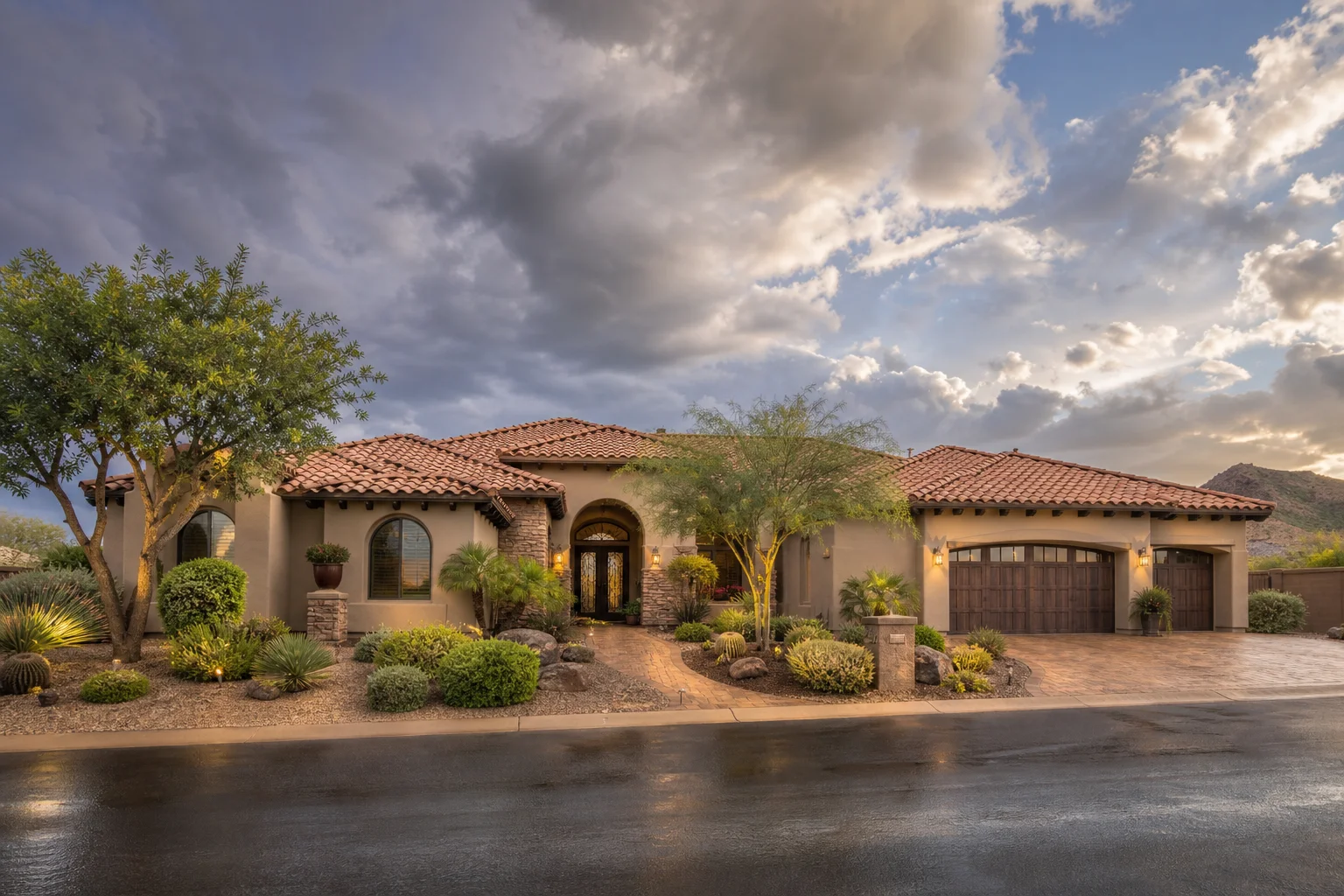
Choosing the right roofing materials is one of the most impactful decisions an Arizona homeowner makes. Concrete and clay tile dominate the valley because they resist heat and shed water when properly installed. High-performance underlayment systems beneath the tile layer form a secondary water barrier if individual tiles are displaced during a storm.
For homes with shingle sections, impact-resistant shingle options perform noticeably better against flying debris and hail than standard three-tab or architectural shingles. No roofing materials last indefinitely under the arizona monsoon cycle of UV exposure, thermal contraction, and seasonal storm damage. An aging system that has absorbed years of stress is a candidate for full replacement, not an ongoing patch cycle.
Tycho Solutions does not perform minor patch repairs. When roof inspections reveal systemic failure across multiple sections, such as widespread cracked tile, failed underlayment, or flashing separation at several penetrations, a complete re-roof delivers a fully warranted, leak-free result that patchwork cannot.
When Storm Damage Leads to an Insurance Claim
Storm damage to roofs is one of the most common homeowner insurance claims in the Phoenix metro. Documenting conditions correctly is essential.
Key steps for filing a monsoon claim:
- Photograph all damage from the ground before any cleanup or tarping.
- Keep physical evidence such as broken tiles or removed ridge cap pieces.
- Schedule a formal roof inspection so the written report accompanies your claim submission.
- Confirm your policy covers wind and hail damage. Many Arizona policies require a separate endorsement for haboob-related storm damage that homeowners overlook at signing.
A professional roof inspection report gives insurers the third-party documentation needed to process claims and reduces disputes over replacement scope. Get a Free Estimate from Tycho Solutions to start the inspection process and build the documentation your claim requires.
Frequently Asked Questions
How soon after a monsoon should I schedule a roof inspection?
Schedule a roof inspection within 48 to 72 hours after any storm that brought high winds, hail, or heavy rain. Acting quickly lets you document roof damage for insurance purposes before further weather exposure worsens conditions. Early inspection also catches water intrusion before moisture spreads into the roof deck, insulation, or interior ceiling of your home.
Can I check for monsoon roof damage myself?
A ground-level walkthrough to spot broken tiles, missing ridge caps, and debris-filled gutters is a safe first step any homeowner can take. Walking on a tile or shingle roof without training risks personal injury and can crack undamaged tiles. For anything beyond a visual survey, a professional roof inspection from a licensed contractor is the safer and more thorough approach.
What roofing materials hold up best in Arizona monsoon conditions?
Concrete and clay tile are the regional standard because they handle heat and shed water when properly installed. Impact-resistant underlayment beneath tile adds a secondary water barrier if tiles are displaced by flying debris or high winds. For shingle sections, impact-resistant shingle options outperform standard shingles during storm events. A licensed contractor can evaluate which roofing materials fit your specific roof slope, age, and exposure.
Does insurance cover monsoon roof damage in Arizona?
Most standard homeowner policies cover wind and hail storm damage, but terms vary by carrier. Some policies require a separate endorsement for haboob-related damage. A written roof inspection report from a licensed contractor is typically required when filing a claim, so scheduling one promptly after any arizona monsoon event protects your claim timeline.
When does storm damage call for a full re-roof instead of spot repair?
When roof inspections reveal failure across multiple sections, including widespread cracked tile, deteriorated underlayment, or flashing separation at several penetrations, a full re-roof addresses the entire system rather than isolated points. Tycho Solutions evaluates each situation during a no-obligation assessment and recommends the long-term solution that protects your home through future monsoon seasons.
Schedule Your Post-Monsoon Roof Assessment Now
Every arizona monsoon season reveals weak points in roofs that have been quietly aging under desert conditions. The homes that come through it best are the ones whose owners act quickly after storm damage appears. Whether you found cracked tiles, gutters pulling away from the fascia, or signs of a roof leak inside, a professional inspection gives you a clear picture before the next storm arrives. Reach out through Tycho's roofing team or any Tycho Valley service area to schedule your assessment and protect your home through every monsoon season ahead.